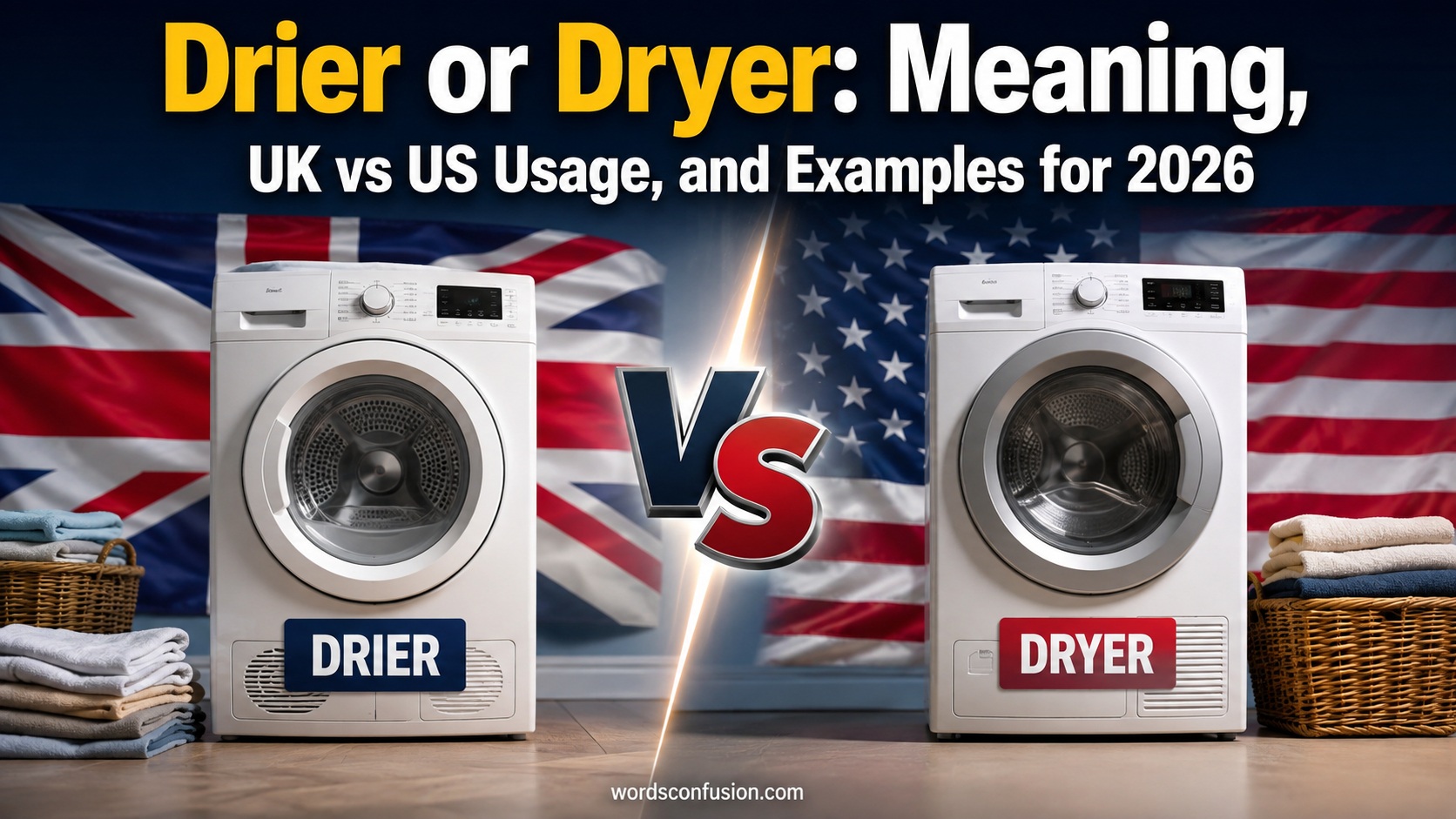
If you’ve ever wondered whether to write drier or dryer, you’re not alone. The two words look almost identical and often sound the same in everyday speech. Yet they usually perform different jobs in a sentence.
The confusion becomes even greater when you see phrases such as drier weather, hair dryer, tumble dryer, and drier than before. Is one spelling American while the other is British? Is dryer simply an alternative spelling of drier? Or does the meaning change depending on the sentence?
The good news is that the basic distinction is easier than it first appears. Drier is normally the comparative form of dry, while dryer commonly refers to a machine or device that removes moisture. However, English has a few wrinkles here. Dictionaries also record drier as a noun in some contexts, so treating the two spellings as completely separate isn’t quite accurate.
Quick Answer
The simplest rule is this:
- Drier usually means more dry or less wet.
- Dryer usually means a machine or device used for drying something.
- Drier weather is correct when you’re comparing weather conditions.
- Drier than is the standard comparative expression.
- Hair dryer is the usual spelling for the appliance.
- Tumble dryer is the common British English term for a clothes-drying machine.
- Drier can also appear as a noun in dictionary-recognized usage, although dryer is generally the more familiar spelling for a drying device.
For example:
The desert has drier air than the coast.
Here, drier compares two levels of dryness.
She bought a new hair dryer.
Here, dryer names an appliance.
So, when you’re describing something becoming more dry, choose drier. When you’re naming a device that dries something, dryer is usually the better choice.
Comparison Overview
The following table gives you the difference at a glance.
| Word | Usual function | Meaning | Example |
| Drier | Comparative adjective | More dry or less moist | The soil is drier today. |
| Dryer | Noun | A device or machine that dries | The clothes are in the dryer. |
| Drier | Noun in some usage | Something that dries | The term appears as a noun variant in dictionaries. |
| Dryer | Comparative in some usage | More dry | Some dictionaries record dryer as a variant comparative. |
The first two rows cover the distinction you’ll encounter most often.
In ordinary writing, drier works naturally when dry is being compared. Dryer works naturally when you’re talking about an appliance or another drying device.
Main Differences Between Drier or Dryer
The biggest difference between drier and dryer comes from their usual grammatical roles.
Drier Means More Dry
Drier is normally the comparative form of the adjective dry.
The pattern is:
dry → drier → driest
You use drier when one thing has less moisture than another.
For example:
- Today’s air is drier than yesterday’s.
- This towel is drier than the other one.
- The western region has a drier climate.
- The ground becomes drier during the summer.
- My skin feels drier in cold weather.
The comparison doesn’t always need an explicit second object. A sentence such as The air is getting drier still makes a comparison with an earlier condition.
Dryer Usually Means a Drying Device
Dryer commonly functions as a noun. It refers to something designed to remove moisture.
Common examples include:
- clothes dryer
- hair dryer
- hand dryer
- grain dryer
- food dryer
- industrial dryer
- tumble dryer
Consider this sentence:
The dryer stopped working halfway through the cycle.
Here, dryer doesn’t describe how dry something is. It names the machine.
That’s the key difference.
A Simple Way to Remember the Difference
Think about the question you’re answering.
If you’re asking:
“How dry is it?”
You probably need drier.
If you’re asking:
“What machine dries it?”
You probably need dryer.
For example:
The towels are drier now.
You’re describing their condition.
The towels are in the dryer.
You’re naming the machine.
One letter makes the spelling look different, but the grammatical job changes too.
What Does Drier Mean?
Drier is primarily the comparative form of dry. It describes something with less moisture than something else or something that has become less moist.
The word can apply to many physical conditions.
Drier Weather
Weather provides one of the most common uses.
The forecast predicts drier weather next week.
This means the weather is expected to have less rain, humidity, or moisture than another period.
You could also say:
This summer has been drier than last summer.
The comparison is clear. One summer has experienced less moisture than the other.
Drier Soil
Gardeners, farmers, and scientists frequently use drier to describe soil conditions.
The upper layer of soil is drier than the soil underneath.
Here, drier compares moisture levels.
The word doesn’t necessarily mean completely dry. It simply indicates less wet or less moist.
Drier Air
The expression drier air commonly appears in discussions about weather and climate.
Cold continental air can feel drier than humid coastal air.
Again, the comparison concerns moisture.
Drier Paint
The word also works when something gradually loses moisture.
The paint became drier overnight.
This sentence compares the paint’s current condition with its earlier condition.
Drier Can Describe Figurative Meanings
The word dry doesn’t always describe moisture. It can also describe things such as humor, writing, or a person’s manner.
For example:
His humor became drier as the conversation continued.
Here, drier doesn’t mean that the humor contains less water. It means the humor became more understated, deadpan, or subtle.
That’s an important feature of English: words often carry both literal and figurative meanings.
What Does Dryer Mean?
Dryer most commonly refers to something that dries another object or substance.
The term is especially common for appliances and equipment.
Clothes Dryer
In American English, dryer commonly means a machine that dries clothes after washing.
I put the wet clothes in the dryer.
The word can also appear by itself when the context already makes the meaning obvious.
Is the dryer finished?
Most American readers will understand that this refers to a clothes dryer.
Hair Dryer
A hair dryer is an electrical device that blows warm or heated air over wet hair.
Examples include:
She packed her hair dryer before the trip.
The hotel bathroom has a hair dryer.
The spelling hair dryer is the standard modern form you’ll encounter most often.
Hand Dryer
A hand dryer dries wet hands using moving air.
For example:
The restroom has an automatic hand dryer.
The same noun pattern applies to many other devices.
Industrial Dryer
Large-scale manufacturing also uses dryers to remove moisture from materials.
Examples include:
- grain dryers
- food dryers
- chemical dryers
- lumber dryers
- industrial drying systems
In each case, dryer identifies equipment rather than comparing dryness.
Drier or Dryer as a Noun
This is where the topic gets more interesting.
It’s tempting to say:
“Drier is always an adjective and dryer is always a noun.”
That’s a useful beginner’s rule, but it’s too absolute.
Major English dictionaries recognize drier as a noun in certain usage. In other words, drier can refer to something that dries.
Historically and regionally, both spellings have appeared in noun usage.
Still, modern readers are generally more familiar with dryer when referring to an appliance.
For example:
Put the clothes in the dryer.
This sounds completely natural in contemporary American English.
You may encounter:
Put the clothes in the drier.
The second spelling isn’t automatically meaningless or impossible. However, dryer is the safer and more familiar choice when you’re naming a modern drying machine.
This distinction matters because good grammar advice should describe actual English usage rather than pretending every variation is either completely correct or completely wrong.
Drier or Dryer UK vs US Usage
The question “Is drier British and dryer American?” comes up frequently.
The answer is no—not as a general rule.
Both British and American English use drier as the normal comparative form of dry. Both also use dryer for many drying devices.
The major regional difference appears more clearly in the vocabulary surrounding clothes-drying appliances.
| Meaning | US English | UK English |
| Comparative of dry | drier | drier |
| Clothes machine | dryer | tumble dryer |
| Hair appliance | hair dryer | hair dryer |
| Weather comparison | drier weather | drier weather |
| More dry | drier | drier |
British English strongly favors tumble dryer for the machine used to dry clothes.
American English usually uses clothes dryer or simply dryer.
So the difference isn’t really:
British = drier
American = dryer
Instead, it’s more accurate to say:
Comparative adjective = drier in both varieties
Drying appliance = dryer, with “tumble dryer” especially common in British English
That’s a much more reliable rule.
Drier Weather or Dryer Weather?
If you’re writing about climate, rainfall, humidity, or atmospheric conditions, drier weather is normally the right choice.
The region is experiencing drier weather this year.
Farmers are preparing for drier conditions.
The forecast calls for drier weather next week.
Why?
Because you’re comparing the amount of moisture in the weather.
The word drier is the comparative form of dry.
Is Dryer Weather Wrong?
Drier weather is the clearest and most standard choice for formal writing.
You may occasionally encounter dryer used as a comparative spelling. Some dictionaries recognize dryer as a variant of drier. However, this spelling can create confusion because dryer has a very common noun meaning.
Compare:
The region is becoming drier.
with:
The region is buying another dryer.
The first sentence describes environmental conditions. The second names equipment.
For clarity, drier weather is the better choice.
Drier Than or Dryer Than?
When you compare two things, use drier than in standard, careful writing.
Examples:
- Arizona is drier than many eastern states.
- This towel is drier than that one.
- The air feels drier than it did yesterday.
- The soil is drier than it was last week.
- This room is drier than the basement.
The structure is straightforward:
Subject + is + drier + than + comparison
For example:
The desert is drier than the rainforest.
The adjective drier describes the desert’s relative lack of moisture.
Can You Say Dryer Than?
You might see dryer than in real-world writing. Some dictionaries record dryer as a variant comparative of dry.
However, drier than remains the clearest choice when you’re writing for a broad audience, especially in formal, academic, educational, or professional content.
There’s another reason to prefer it: readers instantly recognize drier as the comparative adjective.
Read More: Labeller or Labeler: UK vs US Spelling Explained With Examples for 2026
Hair Dryer or Hair Drier?
The standard modern choice is hair dryer.
A hair dryer is a device that uses moving air, often heated air, to dry hair.
Examples:
I need to buy a new hair dryer.
Her hair dryer stopped working.
The hotel provides a hair dryer.
The noun dryer fits naturally because the device performs the action of drying.
Why Isn’t It Hair Drier?
Technically, drier has noun history and dictionary support. However, hair dryer has become the dominant modern spelling for this appliance.
When you’re writing product descriptions, instructions, shopping content, or everyday English, hair dryer is the natural choice.
Tumble Dryer or Tumble Drier?
If you’re writing in British English, tumble dryer is the most familiar term for an appliance that dries clothes by rotating them in a heated drum.
For example:
The tumble dryer needs to be cleaned.
Don’t overload the tumble dryer.
The clothes are still inside the tumble dryer.
You may also encounter tumble drier. That spelling has dictionary recognition and isn’t simply a made-up variation.
Still, tumble dryer is the more familiar modern form.
In American English, you’ll usually see clothes dryer or simply dryer instead.
Drier or Dryer Examples in Real Sentences
Context makes the distinction much easier to understand.
Examples Using Drier
- The climate here is drier than it was a decade ago.
- Today’s air feels drier than yesterday’s.
- The towel is drier now.
- The soil becomes drier during the hottest months.
- This region has drier winters.
- The paint looks drier after several hours.
- My hands feel drier in cold weather.
- The western side of the valley is drier than the eastern side.
- His writing became drier and more understated.
- The forecast predicts drier weather next week.
Examples Using Dryer
- The clothes are in the dryer.
- The dryer stopped during the cycle.
- She bought a new hair dryer.
- The bathroom has a wall-mounted hand dryer.
- The farm uses a grain dryer.
- Clean the lint filter before using the dryer.
- The hotel provides a hair dryer.
- The tumble dryer is running.
- The factory installed a larger industrial dryer.
- The new dryer uses less energy.
Drier vs Dryer: Side-by-Side Examples
| Sentence | Correct word | Why |
| The air is ___ today. | drier | It describes moisture level. |
| Put the clothes in the ___. | dryer | It names a machine. |
| This towel is ___ than mine. | drier | It compares dryness. |
| I bought a new hair ___. | dryer | It names an appliance. |
| We expect ___ weather. | drier | It describes weather conditions. |
| The ___ isn’t working. | dryer | It refers to a machine. |
| The soil is ___ after the heat wave. | drier | It describes reduced moisture. |
| Use the hand ___. | dryer | It names a drying device. |
| The western climate is ___. | drier | It describes comparative dryness. |
| The ___ finished its cycle. | dryer | It refers to equipment. |
FAQs:
Is it drier or dryer weather?
Drier weather is the standard choice. You’re describing weather with less moisture, so drier functions as the comparative form of dry.
Is it drier than or dryer than?
Drier than is the clearest standard form.
The climate here is drier than it was last year.
Some dictionaries recognize dryer as a variant comparative, but drier avoids confusion and works well in formal writing.
Is hair dryer or hair drier correct?
Hair dryer is the usual modern spelling for the appliance.
Although drier has noun usage in some dictionaries, hair dryer is the form most readers will expect.
Is tumble dryer or tumble drier correct?
Tumble dryer is the common modern British English term. Tumble drier also occurs as an alternative spelling.
For general contemporary writing, tumble dryer is the safer choice.
Are drier and dryer pronounced the same?
They can be pronounced the same or very similarly depending on the speaker and variety of English. That’s why context and spelling matter when you’re writing.
Conclusion:
The difference between drier and dryer becomes simple once you focus on meaning rather than the spelling alone. The UK-versus-US distinction doesn’t change this basic rule. Both forms of English commonly use drier as the comparative adjective. British English simply has a particularly common term, tumble dryer, where American English usually says clothes dryer or dryer.
