Have you ever typed labeller and wondered whether your spelling checker should have accepted labeler instead? Or perhaps you wrote labeler for a British audience and started second-guessing the missing l.
The good news is that neither spelling is simply “wrong.” Labeller and labeler are established English words with the same basic meaning. The main difference comes from regional spelling conventions.
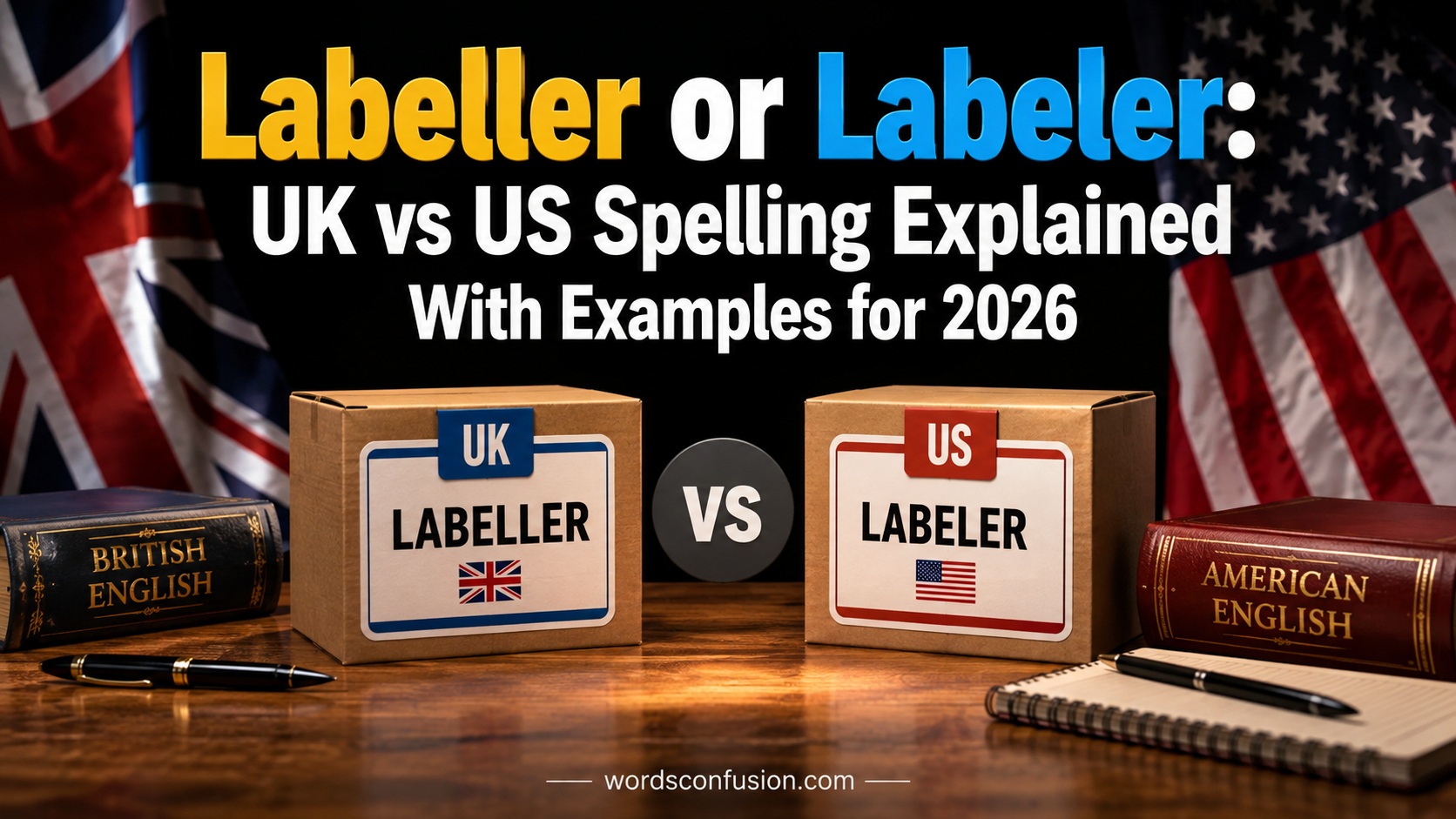
American English generally uses labeler, while British English generally uses labeller. The same regional pattern appears in related forms such as labeling/labelling and labeled/labelled.
That small spelling difference matters when you’re writing product descriptions, technical documents, workplace material, academic content, or anything else aimed at a specific English-speaking audience. Once you understand the pattern, the choice becomes much easier.
Quick Answer
Labeler is the standard American English spelling, while labeller is the standard British English spelling. Both words generally mean a person or machine that labels something.
| Word | Preferred English variety | Meaning |
| Labeler | American English | A person or machine that labels |
| Labeller | British English | A person or machine that labels |
For example:
- US: The labeler applies stickers to each bottle.
- UK: The labeller applies stickers to each bottle.
The difference isn’t about meaning. It’s primarily about spelling conventions.
If you’re writing for readers in the United States, choose labeler. If you’re writing for readers in the United Kingdom, labeller will usually fit better.
Comparison Overview
The easiest way to understand labeller vs labeler is to compare the forms side by side.
| Feature | Labeler | Labeller |
| English variety | US English | UK English |
| Spelling | One l before -er | Double ll before -er |
| Part of speech | Noun | Noun |
| Refers to a person | Yes | Yes |
| Refers to a machine | Yes | Yes |
| Basic meaning | Someone or something that labels | Someone or something that labels |
| Related -ing form | labeling | labelling |
| Related past form | labeled | labelled |
So, if you remember only one thing, remember this:
Labeler = American English. Labeller = British English.
Neither spelling changes the underlying meaning.
Main Differences Between Labeller or Labeler
The main difference between labeller and labeler is the spelling used in different varieties of English.
American English generally favors shorter spellings in several situations. British English often retains or uses doubled consonants in comparable forms. The word label provides a useful example of that broader difference.
When English adds certain suffixes to label, American and British conventions can produce different spellings:
- labeler → American English
- labeller → British English
- labeling → American English
- labelling → British English
- labeled → American English
- labelled → British English
The pronunciation and basic meaning remain essentially the same.
Labeler in American English
American English normally uses labeler with one l before the -er ending.
You’ll see this spelling in contexts such as:
- Product packaging
- Manufacturing
- Warehousing
- Shipping
- Retail
- Data annotation
- Technical documentation
- Software and technology
For example:
The company purchased an automatic labeler for its new production line.
Here, labeler refers to a machine.
It can also describe a person:
The labeler inspected every package before shipment.
In this sentence, the word refers to a worker.
Labeller in British English
British English generally uses labeller with a double l.
The meaning doesn’t change.
For example:
The company purchased an automatic labeller for its new production line.
Or:
The labeller inspected every package before shipment.
The context tells you whether the noun refers to a person or a machine.
What Does Labeler Mean?
A labeler is a noun derived from the verb label. It generally describes something or someone that puts a label on an object or assigns a label to information.
The word has two important uses.
Labeler as a Person
A labeler can be a person whose job involves applying labels or assigning categories.
For example:
The labeler checked every box before it entered the warehouse.
In modern technology, the term also appears in data annotation.
A data labeler may classify images, text, audio, or other information so that a dataset becomes useful for analysis or machine-learning systems.
For example:
The image labeler identified every vehicle in the photographs.
In this case, the person isn’t physically attaching stickers. Instead, the person assigns meaningful categories or tags to digital information.
Labeler as a Machine
A labeler can also refer to equipment that automatically applies labels.
This meaning appears frequently in manufacturing and packaging.
For example:
The automatic labeler applies a barcode to every package.
A production facility might use a labeler to place:
- Product labels
- Barcodes
- Shipping labels
- Price labels
- Identification stickers
- Safety information
- Batch information
The exact machine varies according to the product and production process.
What Does Labeller Mean?
Labeller has essentially the same meaning as labeler. The major difference is the spelling associated with British English.
A British workplace document might say:
The labeller applies a product sticker to each container.
A British technical manual could say:
Clean the labeller regularly to prevent adhesive buildup.
The word can describe either a person or a machine.
That’s important because some readers assume that the extra l indicates a different object. It doesn’t.
Labeller and labeler normally refer to the same concept.
Why Does British English Use “Labeller” While American English Uses “Labeler”?
The spelling difference comes from different conventions that developed within British and American English.
The distinction becomes clearer when you look at the related forms of label.
| Form | American English | British English |
| Base verb | label | label |
| Person/device noun | labeler | labeller |
| Present participle | labeling | labelling |
| Past tense | labeled | labelled |
British English often retains the doubled consonant in forms such as labelled and labelling. American English generally uses labeled and labeling.
The noun follows a similar pattern in common usage:
label + er → labeler in American English
label + l + er → labeller in British English
However, it’s better to think of these as established regional spellings rather than applying one mechanical rule to every English word.
English spelling has plenty of exceptions. A simple formula won’t explain every difference between British and American English.
Labeler vs Labeller and the Verb “Label”
One useful way to avoid confusion is to start with the base verb.
Label means to attach a label to something or to identify or classify something.
For example:
Please label the boxes before moving them.
From this verb, English creates several related forms.
American English
- label
- labeling
- labeled
- labeler
British English
- label
- labelling
- labelled
- labeller
This creates a neat spelling family.
| Meaning | US English | UK English |
| Present action | labeling | labelling |
| Past action | labeled | labelled |
| Person/device | labeler | labeller |
Once you recognize the pattern, labeller or labeler becomes much easier to remember.
Labeler or Labeller for a Machine?
Both spellings can describe a machine.
In industrial settings, a labeler/labeller may automatically apply labels to products as they move through a production system.
For example, a beverage manufacturer might use equipment to apply labels to thousands of bottles.
American documentation might say:
The automatic labeler applies the labels at high speed.
British documentation might say:
The automatic labeller applies the labels at high speed.
The machine doesn’t change because of the spelling.
Only the written form changes.
Common Machine-Related Phrases
You may encounter expressions such as:
- Automatic labeler
- Automatic labeller
- Bottle labeler
- Bottle labeller
- Industrial labeler
- Industrial labeller
- Barcode labeler
- Barcode labeller
- Product labeler
- Product labeller
- Packaging labeler
- Packaging labeller
The preferred form depends on the English variety used by the manufacturer, publication, or target audience.
Labeler or Labeller for a Person?
The same regional distinction applies when the word refers to a person.
An American company might write:
We need an experienced labeler for the packaging department.
A British company might write:
We need an experienced labeller for the packaging department.
The job itself doesn’t change.
In both cases, the worker might apply product labels, organize packages, or perform related labeling tasks.
The word can also describe someone involved in digital classification.
For example:
The data labeler categorized thousands of images.
In British English:
The data labeller categorized thousands of images.
The spelling changes, while the role remains essentially the same.
Read More: Patient or Patience: Meaning, Differences, and Examples
Labeler in Data Annotation and AI
The word labeler has gained practical importance in data annotation and artificial intelligence.
A data labeler assigns meaningful categories or annotations to raw information. These annotations can help create datasets for machine-learning systems.
For example, a labeler might examine an image and identify:
- Cars
- Pedestrians
- Traffic signs
- Buildings
- Animals
In a text dataset, a labeler might classify content according to sentiment, topic, intent, or another defined category.
In British English, the same person may be called a data labeller.
Example
US English:
The data labeler reviewed 10,000 images for the computer-vision project.
UK English:
The data labeller reviewed 10,000 images for the computer-vision project.
Neither sentence changes the person’s role.
The spelling simply reflects the intended English variety.
Labeler vs Label Maker vs Labeling Machine
These terms sometimes overlap in everyday conversation, but they don’t always mean exactly the same thing.
| Term | Typical meaning |
| Labeler/Labeller | A person or device that labels something |
| Label maker | A device designed to create printed labels |
| Labeling machine | Equipment designed to apply labels, especially in production |
| Label | A tag, sticker, or identifying information |
Consider an office.
You might use a label maker to print a name label for a folder.
Now consider a factory producing thousands of bottles per hour. It may use an automated labeling machine or labeler to apply labels during production.
The terms overlap in some commercial settings. However, they aren’t automatically interchangeable in every technical context.
Labeling or Labelling: The Related Spelling You Should Know
If you’re unsure about labeler or labeller, you’ll probably encounter another spelling question soon: labeling or labelling.
The pattern is straightforward.
Labeling is the standard American English form.
Labelling is the standard British English form.
Examples:
American English
The company is labeling the packages today.
British English
The company is labelling the packages today.
The same regional distinction appears with the past tense.
American English
The packages were labeled correctly.
British English
The packages were labelled correctly.
These forms belong to the same spelling family as labeler/labeller.
Labeled or Labelled: Another Related Difference
The past-tense forms can help you identify which spelling system you’re using.
| US English | UK English |
| labeled | labelled |
| labeling | labelling |
| labeler | labeller |
For example:
The technician labeled each container.
That’s standard American English.
In British English:
The technician labelled each container.
Both versions communicate the same idea.
Why Consistency Matters
Imagine a professional document that says:
The labeller applies labels before the operator begins labeling the containers.
The sentence isn’t impossible to understand. However, it mixes the British noun labeller with the American participle labeling.
A cleaner American version would use:
The labeler applies labels before the operator begins labeling the containers.
A cleaner British version would use:
The labeller applies labels before the operator begins labelling the containers.
Consistency makes professional writing look deliberate and polished.
Is “Labeller” Correct in American English?
Labeller is a recognized spelling, but American English generally prefers labeler.
If you’re writing for a US audience, labeler is the safer and more natural choice.
For example:
The labeler automatically prints and applies shipping labels.
That’s a natural American English sentence.
Using labeller won’t usually prevent an American reader from understanding the sentence. Still, it can make the writing look British or inconsistent with surrounding American spellings.
Therefore, if your document follows American English, use labeler.
Is “Labeler” Correct in British English?
Labeler is also a recognized spelling, but British English generally favors labeller.
For British readers, this version fits the usual spelling pattern:
The labeller automatically applies the product labels.
You’ll still encounter labeler in international products, software, technical documentation, and websites. American English has a large global influence, especially in technology and business.
That doesn’t make the British spelling incorrect.
The key is to match your spelling to the audience and style you’re using.
FAQs:
Is “labeler” or “labeller” correct?
Both are correct. American English generally uses labeler, while British English generally uses labeller.
Is “labeller” British or American?
Labeller is primarily the British English spelling. It uses the doubled l found in related British forms such as labelling and labelled.
Is “labeler” American or British?
Labeler is primarily the American English spelling. It commonly appears alongside labeling and labeled.
Do labeller and labeler mean the same thing?
Yes. Both generally describe a person or machine that labels something.
The context determines whether the word refers to a human worker, an automated machine, or someone who assigns digital categories.
Should I write labeling or labelling?
Use labeling in American English and labelling in British English.
For example:
- US: The system is labeling the files.
- UK: The system is labelling the files.
Conclusion:
The labeller or labeler debate looks complicated until you spot the simple regional distinction. Labeler is the preferred American English spelling. Labeller is the preferred British English spelling. Both words can describe a person or a machine that labels something, and neither spelling changes the core meaning.
