
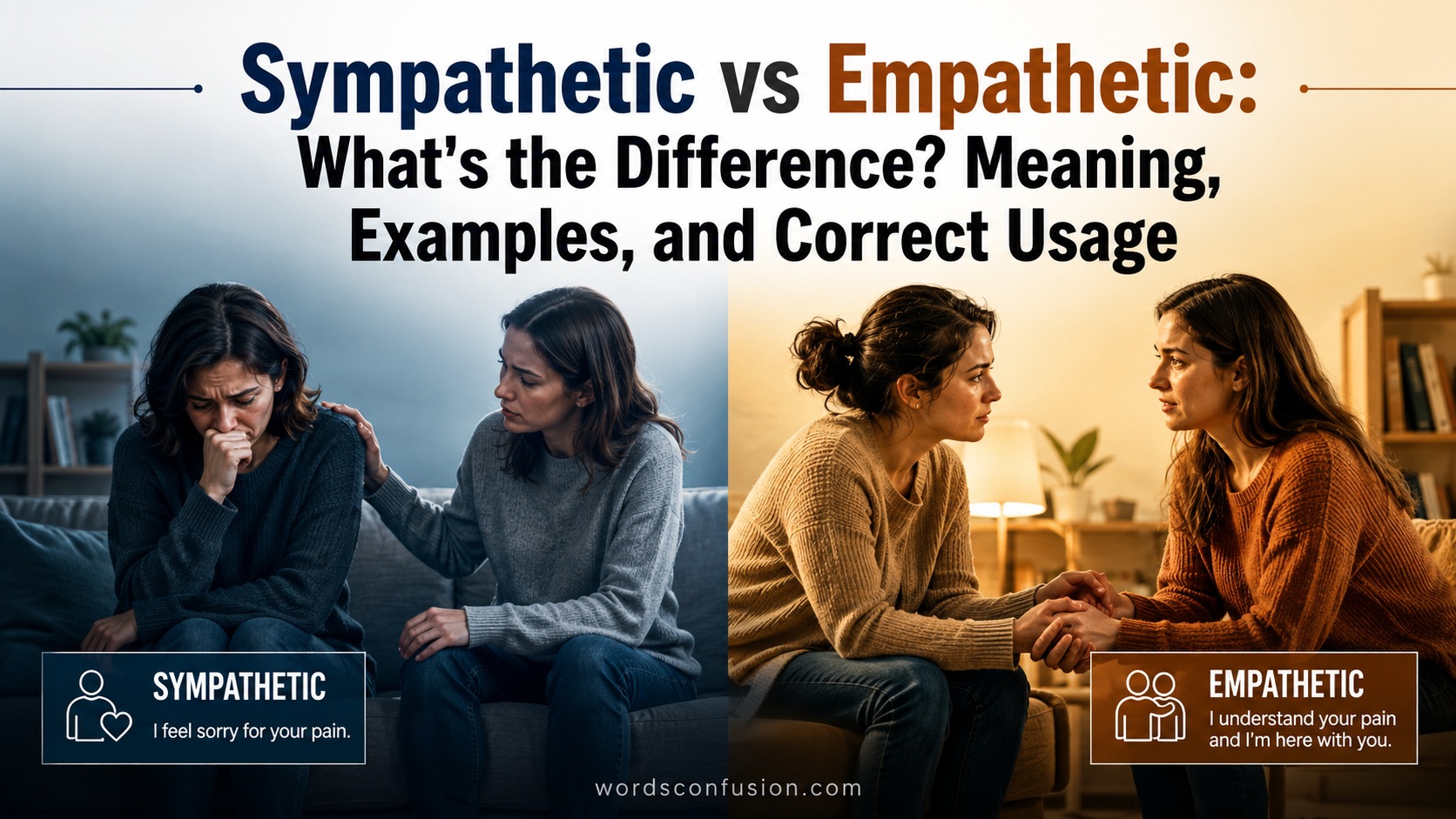
Have you ever comforted a friend after a difficult day only to wonder whether you were being sympathetic or empathetic? You’re not alone. These two words appear in everyday conversations, workplace discussions, psychology books, and even job descriptions. Yet many people use them as if they mean exactly the same thing.
At first glance, the difference seems small. Both words describe caring about another person’s feelings. However, the way they express that care is quite different. A sympathetic person recognizes someone else’s hardship and offers compassion. An empathetic person goes a step further by trying to understand how that person actually feels from their perspective.
Knowing the difference isn’t just about using the correct word. It can improve your communication, strengthen your relationships, and help you respond more thoughtfully in difficult situations. Whether you’re writing an email, preparing for an interview, supporting a friend, or simply expanding your vocabulary, choosing the right word makes your message clearer and more meaningful.
In this guide, you’ll learn the meanings of sympathetic and empathetic, discover where each word came from, compare their differences, explore real-life examples, avoid common mistakes, and pick up an easy memory trick that will help you remember the distinction for good.
Quick Answer
The difference between sympathetic and empathetic comes down to how you relate to another person’s emotions.
- Sympathetic means showing concern, kindness, or compassion for someone else’s suffering or difficulties.
- Empathetic means understanding and sharing another person’s emotions by seeing the situation from their point of view.
Here’s a simple comparison:
| Sympathetic | Empathetic |
| You feel for someone. | You try to feel with someone. |
| Focuses on compassion and support. | Focuses on understanding another person’s emotions. |
| You acknowledge their pain. | You imagine experiencing their pain yourself. |
| Often leads to comforting words. | Often begins with careful listening. |
Quick Example
Sympathetic:
“I’m so sorry you lost your job. I hope things get better soon.”
This response shows concern and kindness.
Empathetic:
“I can imagine how stressful losing your job must feel. I’d probably feel overwhelmed too.”
This response attempts to understand the other person’s emotional experience.
Easy Rule to Remember
- Sympathy = Care
- Empathy = Understand
Both qualities are valuable. The best communicators often show empathy first and sympathy second.
What Does Sympathetic Mean?
The adjective sympathetic describes someone who expresses concern, kindness, understanding, or compassion toward another person’s hardship. When you’re sympathetic, you recognize that someone is struggling and want to offer comfort or support.
Being sympathetic doesn’t mean you’ve experienced the same situation yourself. Instead, you acknowledge another person’s pain and respond with genuine care.
Definition
Sympathetic means:
Feeling or expressing compassion, concern, or sorrow for another person’s difficulties or suffering.
In everyday English, the word often describes someone who is caring, considerate, and willing to help during difficult moments.
Origin and Etymology
The word sympathetic comes from the Greek word sympatheia, which combines:
- syn meaning together
- pathos meaning feeling or emotion
It entered English in the sixteenth century and originally referred to shared feelings or mutual emotional connection. Over time, its meaning shifted toward expressing compassion or concern for someone else’s situation.
Understanding its origin helps explain why sympathy involves emotional concern without necessarily experiencing the exact same feelings.
When to Use Sympathetic
Use sympathetic when someone:
- Shows compassion.
- Offers emotional support.
- Expresses condolences.
- Understands that another person is suffering.
- Responds with kindness instead of judgment.
You might describe a person as sympathetic if they patiently listen to someone’s problems and genuinely want to help.
Common Situations Where “Sympathetic” Fits Best
During Difficult Times
People often become sympathetic after hearing bad news.
Example:
“Everyone was sympathetic after hearing about the family’s loss.”
At Work
Managers often need to be sympathetic when employees experience personal challenges.
Example:
“The supervisor was sympathetic when the employee explained the family emergency.”
Customer Service
A sympathetic representative acknowledges a customer’s frustration before offering a solution.
Instead of saying:
“That’s our policy.”
A sympathetic response sounds like:
“I understand why you’re frustrated. Let’s see what we can do.”
Friendships
Friends frequently show sympathy after disappointments such as breakups, failed exams, or financial setbacks.
Characteristics of a Sympathetic Person
A sympathetic person often:
- Shows kindness during difficult situations.
- Offers encouragement.
- Listens without criticizing.
- Expresses concern sincerely.
- Wants to reduce another person’s suffering.
These actions create emotional support even if the person doesn’t fully understand what the other individual is experiencing.
Examples of Sympathetic in Sentences
- My neighbors were sympathetic after the storm damaged our home.
- She gave me a sympathetic smile before the meeting started.
- The teacher remained sympathetic when the student explained why the assignment was late.
- Everyone appreciated his sympathetic attitude during the difficult project.
- The doctor spoke in a calm and sympathetic voice.
Notice that every example focuses on care and compassion rather than sharing the exact emotional experience.
What Does Empathetic Mean?
While sympathy centers on caring, empathetic centers on understanding.
An empathetic person tries to imagine another person’s emotions from their point of view instead of viewing the situation from the outside. They don’t simply recognize sadness, frustration, or fear. They mentally place themselves in the other person’s position to better understand what those emotions feel like.
Because of this deeper emotional connection, empathy often creates stronger relationships and more meaningful conversations.
Definition
Empathetic means:
Having the ability to understand and share another person’s feelings or emotional experience.
The emphasis falls on understanding another person’s internal world rather than simply recognizing that they’re hurting.
Origin and Etymology
The word empathetic comes from empathy, which entered English during the early twentieth century.
The concept developed from the German word Einfühlung, meaning “feeling into.”
Psychologists adopted the term to describe the ability to mentally and emotionally place yourself in another person’s experience.
Today, empathy plays an important role in psychology, counseling, education, leadership, medicine, and communication.
When to Use Empathetic
Use empathetic when someone:
- Understands another person’s emotions.
- Listens without making assumptions.
- Imagines another person’s perspective.
- Connects emotionally.
- Responds thoughtfully after understanding someone’s feelings.
Empathy requires curiosity as much as compassion.
Instead of immediately offering advice, an empathetic person usually listens first.
Common Situations Where “Empathetic” Fits Best
Counseling and Therapy
Therapists rely on empathy to understand what clients are experiencing emotionally.
Leadership
Modern workplaces increasingly value empathetic leaders because employees perform better when they feel understood.
Parenting
Parents often practice empathy by recognizing why children feel upset before correcting their behavior.
Healthcare
Doctors and nurses who demonstrate empathy frequently build stronger trust with patients.
Friendships
Close friends often rely on empathy during emotional conversations because understanding matters just as much as solving problems.
Characteristics of an Empathetic Person
Someone who is empathetic often:
- Listens carefully.
- Pays attention to emotions.
- Avoids quick judgments.
- Asks thoughtful questions.
- Understands different perspectives.
- Makes others feel heard.
These habits help create trust and emotional safety.
Examples of Empathetic in Sentences
- The counselor remained empathetic throughout the entire session.
- She’s an empathetic manager who understands employee concerns.
- His empathetic response helped calm the nervous customer.
- The nurse was incredibly empathetic with every patient.
- Good leaders make empathetic decisions that consider how others feel.
Unlike sympathy, empathy focuses less on comforting words and more on genuine emotional understanding.
The Main Difference Between Sympathetic and Empathetic
Many people think sympathetic and empathetic mean the same thing because both involve caring about others. They overlap in some situations. Still, they describe two different emotional responses.
A sympathetic person recognizes that someone is suffering and offers comfort. An empathetic person tries to understand that suffering by imagining what it feels like from the other person’s perspective.
Think of it this way:
- Sympathy says, “I’m sorry this happened to you.”
- Empathy says, “I understand how this must feel.”
Neither approach is better than the other. Each serves a different purpose. In many conversations, the most meaningful response combines both.
Sympathetic vs Empathetic Comparison Table
| Feature | Sympathetic | Empathetic |
| Basic meaning | Showing concern for someone | Understanding another person’s emotions |
| Emotional connection | Feels compassion | Tries to experience another person’s perspective |
| Focus | The person’s hardship | The person’s emotional experience |
| Response | Comfort and support | Listening and understanding |
| Requires shared experience | No | No, but it requires perspective-taking |
| Common settings | Condolences, customer service, everyday conversations | Counseling, healthcare, leadership, close relationships |
A Simple Everyday Example
Imagine your friend fails an important exam.
A sympathetic response might be:
“I’m really sorry. I know you worked hard. I hope you pass next time.”
An empathetic response might be:
“I can imagine how disappointed you feel after spending weeks studying. I’d probably feel discouraged too.”
Both responses are kind. The first offers compassion. The second demonstrates emotional understanding.
The Key Difference in One Sentence
- Sympathy focuses on caring about someone’s pain.
- Empathy focuses on understanding someone’s pain.
That’s the distinction most dictionaries, psychologists, and communication experts agree on.
Sympathy vs Empathy: Understanding the Related Nouns
To understand sympathetic and empathetic, it helps to first understand the nouns they come from: sympathy and empathy.
These words describe emotional responses rather than personality traits. The adjectives simply describe people or actions that show those responses.
What Is Sympathy?
Sympathy means expressing sorrow, concern, or compassion for another person’s suffering.
When you feel sympathy, you recognize someone else’s hardship and want to comfort them. You don’t necessarily know what they’re experiencing firsthand.
For example:
Your coworker tells you their pet passed away.
You respond:
“I’m so sorry for your loss.”
That’s sympathy.
You’re acknowledging the pain and expressing kindness.
What Is Empathy?
Empathy means understanding another person’s emotions by imagining yourself in their situation.
Instead of only recognizing sadness, you try to understand what that sadness feels like.
Suppose your friend loses a job.
Rather than immediately offering advice, you say:
“That must be incredibly stressful. I remember how uncertain life can feel during moments like that.”
This response reflects empathy because it focuses on understanding the emotional experience.
Read More: Safety vs Security: What’s the Difference? Definitions, Examples, and Correct Usage
Why People Confuse These Words
People often confuse sympathy and empathy because both involve kindness.
They also share similar roots related to emotions. In everyday conversations, the difference isn’t always obvious.
Another reason is that many situations involve both.
For example, after hearing about someone’s illness, you might:
- Understand how frightened they feel.
- Feel sorry they’re going through it.
- Offer encouragement.
That response includes empathy and sympathy.
How the Adjectives Relate to the Nouns
The relationship is straightforward.
| Noun | Adjective |
| Sympathy | Sympathetic |
| Empathy | Empathetic |
Examples:
- She showed sympathy, so everyone described her as sympathetic.
- He demonstrated empathy, making him an empathetic listener.
Knowing the noun forms makes it much easier to remember the adjective forms.
Can Someone Be Both Sympathetic and Empathetic?
Absolutely.
In fact, many emotionally intelligent people show both qualities at the same time.
Empathy helps you understand another person’s feelings. Sympathy motivates you to respond with kindness and support.
Together, they create meaningful human connections.
Example
Imagine your friend recently lost a parent.
An empathetic response begins with understanding:
“I can’t fully know what you’re experiencing, but I can imagine how painful this must be.”
A sympathetic response follows naturally:
“I’m so sorry you’re going through this. Let me know if there’s anything I can do.”
Notice how the first statement focuses on emotional understanding while the second offers comfort and support.
When Both Qualities Work Together
Showing both sympathy and empathy can strengthen relationships in many situations, including:
- Supporting grieving family members.
- Helping friends through breakups.
- Leading employees during organizational changes.
- Caring for patients in healthcare.
- Teaching students facing personal challenges.
People often remember how understood they felt even more than the specific advice they received.
Does Empathy Always Lead to Sympathy?
Not always.
You can understand why someone feels angry without agreeing with their behavior.
For example, you might understand why a customer feels frustrated after receiving poor service. That’s empathy.
However, if the customer begins insulting employees, you may no longer feel sympathetic toward their actions.
Empathy explains emotions.
Sympathy expresses compassion.
The two often work together, but they remain separate emotional responses.
Real-Life Examples of Sympathetic vs Empathetic
Understanding definitions is helpful. Seeing how these words work in everyday life makes the distinction much clearer.
At Work
Employees appreciate managers who combine empathy with sympathy.
Sympathetic manager:
“I’m sorry you’re dealing with this family emergency. Take the time you need.”
Empathetic manager:
“I understand how difficult it must be to balance work while worrying about your family. Let’s figure out a schedule that reduces your stress.”
The second response shows a deeper understanding of the employee’s emotional situation.
In Friendships
Suppose your best friend didn’t get accepted into their dream college.
Sympathetic friend:
“I’m really sorry. You deserved better.”
Empathetic friend:
“I know how much this meant to you. You probably feel disappointed because you’ve worked toward this goal for years.”
The empathetic response reflects a deeper emotional connection.
In Romantic Relationships
Healthy relationships rely heavily on empathy.
Imagine one partner says:
“I’ve been overwhelmed lately.”
A sympathetic reply might be:
“I’m sorry you’re stressed.”
An empathetic reply could be:
“It sounds like you’ve been carrying a lot by yourself. That must feel exhausting.”
The second response invites conversation instead of ending it.
In Parenting
Children don’t always need immediate solutions.
They often need understanding first.
Sympathetic parent:
“I’m sorry your friends left you out.”
Empathetic parent:
“That probably made you feel lonely. I’d feel hurt too if my friends excluded me.”
Empathy helps children feel emotionally understood.
In Healthcare
Healthcare professionals frequently combine empathy with sympathy.
A doctor may say:
“I understand why you’re worried about your diagnosis. Many people feel anxious while waiting for results. We’ll go through each step together.”
Patients often trust healthcare providers who acknowledge emotions instead of focusing only on medical facts.
In Customer Service
Excellent customer service begins with empathy.
Instead of saying:
“You’ll have to wait three days.”
An empathetic representative says:
“I understand how frustrating delays can be, especially when you need the item quickly. Let me check whether there’s a faster option.”
That small change makes customers feel respected rather than dismissed.
A Quick Comparison of Everyday Situations
| Situation | Sympathetic Response | Empathetic Response |
| Friend loses a job | “I’m sorry that happened.” | “I can imagine how uncertain you feel right now.” |
| Child fails a test | “Don’t worry. You’ll do better next time.” | “You seem disappointed because you studied so hard.” |
| Coworker feels stressed | “I’m sorry you’re having a rough week.” | “It sounds like you’re carrying too much at once.” |
| Customer is upset | “I’m sorry for the inconvenience.” | “I understand why this situation would be frustrating.” |
| Partner feels anxious | “Everything will be okay.” | “I understand why you’re worried. Let’s talk through it together.” |
These examples show that sympathy comforts, while empathy connects. When you use both thoughtfully, your conversations become more genuine and supportive.
FAQs:
Is empathetic the same as sympathetic?
No. Although the words are closely related, they don’t mean the same thing. Sympathetic means showing concern or compassion for someone else’s difficulties. Empathetic means understanding another person’s emotions by seeing the situation from their perspective. In many cases, people show both qualities at the same time.
Which is better: sympathetic or empathetic?
Neither word is better because each serves a different purpose. Sympathy helps you express kindness and support during difficult times. Empathy helps you understand what another person is feeling. The strongest relationships often involve both empathy and sympathy.
Can you be empathetic without being sympathetic?
Yes. You can understand why someone feels a certain way without necessarily feeling sorry for them. For example, you may understand why a customer is angry after a delayed delivery. That’s empathy. However, if the customer becomes abusive, you may no longer feel sympathetic toward their behavior.
Is “empathetic” grammatically correct?
Yes. Empathetic is a standard English adjective and is widely used in everyday conversation, business, education, healthcare, and psychology. Another accepted form is empathic, though empathetic is more common in general writing.
How can I remember the difference between sympathetic and empathetic?
A simple memory trick is:
- Sympathy = Care
- Empathy = Understand
If you’re mainly expressing compassion, use sympathetic. If you’re trying to understand another person’s feelings from their point of view, use empathetic.
Conclusion:
Understanding the difference between sympathetic vs empathetic can improve the way you communicate in both personal and professional situations. While the two words share a common goal of responding to another person’s emotions, they take different paths to get there.
A sympathetic person recognizes someone else’s pain and offers comfort, kindness, or encouragement. An empathetic person goes one step further by trying to understand what that person is feeling from the inside. Sympathy says, “I care about what you’re going through.” Empathy says, “I understand how this feels.”
Neither response is more valuable than the other. In fact, they often work best together. Empathy builds understanding, while sympathy provides reassurance and support. Whether you’re comforting a friend, leading a team, helping a customer, or strengthening a relationship, knowing when to use each word helps you communicate with greater clarity and compassion.

Andrew Wilson is an experienced language researcher and content writer specializing in WordsConfusion topics. He helps readers understand commonly confused English words, spelling differences, grammar rules, word meanings, and proper usage through clear explanations, practical examples, and easy-to-follow language guides. His goal is to make English learning simple, accurate, and accessible for students, writers, professionals, and everyday learners.