Many English words look almost the same but have different meanings. Especially and specially are perfect examples. Because they share the same root word, many people think they can be used in the same way. However, they are not always interchangeable.
People often search for especially vs specially because they want to write correctly in emails, school assignments, blog posts, business documents, or everyday conversations. Using the wrong word can make a sentence sound unnatural or even change its meaning. The good news is that the difference is simple once you understand it.
In this guide, you’ll learn the meaning of especially and specially, where these words came from, when to use each one, common mistakes to avoid, real-life examples, British and American English usage, Google Trends insights, comparison tables, FAQs, and practical writing tips. By the end of this article, you’ll know exactly which word to choose every time.
Especially vs Specially – Quick Answer
The short answer is:
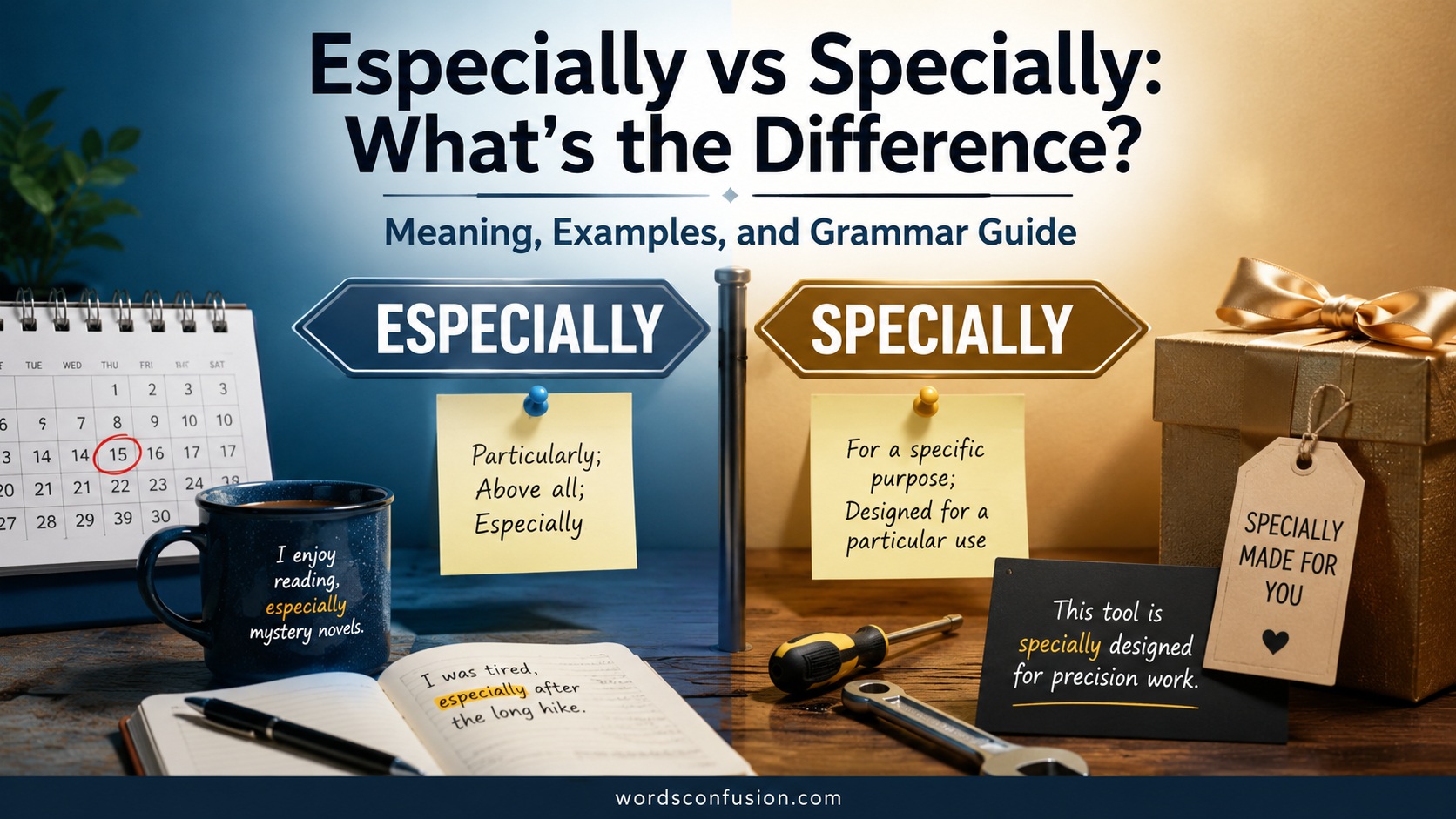
- Especially means particularly, above all, or more than others.
- Specially means for a particular purpose or made specifically for something or someone.
Although both words are adverbs, they have different meanings and are used in different situations.
Quick Comparison
| Word | Meaning | Example |
| Especially | More than usual or more than others | I love fruit, especially mangoes. |
| Specially | Made or done for a particular purpose | This cake was specially baked for your birthday. |
Examples
Especially
- I enjoy reading, especially history books.
- The weather is beautiful, especially in spring.
- Children especially love cartoons.
Specially
- This chair was specially designed for office workers.
- The gift was specially wrapped for the wedding.
- The room was specially prepared for the guests.
Easy Trick to Remember
Use especially when you mean particularly.
I like all sports, especially football.
Use specially when you mean for a special purpose.
This machine was specially built for factories.
Remember this simple rule:
Especially = Particularly
Specially = For a specific purpose
This one trick will help you choose the correct word in almost every sentence.
The Origin of Especially vs Specially
The words especially and specially come from the same family of words. Both are related to the adjective special, which means “different from others” or “important.” Over time, English speakers began using these words in different ways. As a result, each word developed its own meaning and purpose.
Understanding their history makes it easier to remember why they are not always interchangeable.
The Origin of Especially
The word especially comes from the Late Latin word specialis, meaning “particular” or “individual.” It entered Middle English through Old French and gradually took on the meaning of particularly, above all, or more than anything else.
Today, especially is used to give extra importance to one person, thing, or idea.
Examples
- I enjoy outdoor activities, especially hiking.
- The park is beautiful, especially in autumn.
- She loves desserts, especially chocolate cake.
In these examples, especially highlights something as more important or more noticeable than the rest.
The Origin of Specially
The word specially also comes from the adjective special, but it developed a different meaning. It became associated with doing something for a particular reason, purpose, or person.
Instead of adding emphasis, specially describes something that has been created, prepared, or arranged with a specific goal in mind.
Examples
- The dress was specially made for the ceremony.
- This software was specially developed for teachers.
- The meal was specially prepared for vegetarian guests.
Here, the focus is on the purpose behind the action.
Why Do People Confuse These Words?
There are several reasons why especially and specially are commonly mixed up.
- They look almost identical.
- They both come from the word special.
- They are both adverbs.
- In some situations, either word can sound natural, although one is usually more accurate.
- Many learners assume they have the same meaning because of their similar spelling.
For example:
❌ I bought this gift especially for your birthday.
Although many people say this, specially is often a better choice because the gift was made or chosen for a specific purpose.
However, in modern English, especially in informal conversation, native speakers sometimes use especially where specially could also fit. This is one reason dictionaries mention that there can be slight overlap in certain contexts.
How Their Meanings Changed Over Time
| Time Period | Especially | Specially |
| Early English | Mainly meant “particularly” | Mainly meant “for a special purpose” |
| Modern English | Used for emphasis and highlighting | Used for purpose or intention |
| Everyday Usage | Very common | Less common but still important |
The Key Difference Today
Although both words share the same origin, they now serve different jobs in English.
| Especially | Specially |
| Highlights one thing over others | Shows a specific purpose |
| Means particularly | Means specifically made or done |
| Focuses on emphasis | Focuses on intention |
| More common in everyday English | Common when talking about design, preparation, or customization |
Memory Tip
Think of it this way:
- Especially = Extra emphasis
- Specially = Special purpose
Examples
- I love all flowers, especially roses. (Roses get extra emphasis.)
- These roses were specially grown for the flower show. (They were grown for a specific purpose.)
Once you connect especially with emphasis and specially with purpose, choosing the correct word becomes much easier.
British English vs American English Spelling
One question many learners ask is whether especially and specially are British or American spellings. The answer is simple: there is no spelling difference between British English and American English for these two words.
Unlike words such as colour/color, organise/organize, or travelling/traveling, the spellings especially and specially are the same in both varieties of English.
The real difference is meaning, not spelling.
Are There Any Spelling Differences?
No. Both British English and American English use:
- Especially
- Specially
There are no alternative spellings for either word.
How British and American English Use These Words
Both varieties of English follow the same grammar rules.
- Especially means particularly, above all, or more than others.
- Specially means for a particular purpose or made specifically for someone or something.
Examples in American English
- I love sports, especially basketball.
- This software was specially developed for small businesses.
- The restaurant is busy, especially on weekends.
- These shoes were specially designed for runners.
Examples in British English
- I enjoy travelling, especially by train.
- The cake was specially baked for the celebration.
- London is beautiful, especially during Christmas.
- The uniform was specially made for the ceremony.
As you can see, the usage is exactly the same.
British English vs American English Comparison
| Feature | British English | American English |
| Spelling of especially | Especially | Especially |
| Spelling of specially | Specially | Specially |
| Meaning of especially | Particularly | Particularly |
| Meaning of specially | For a specific purpose | For a specific purpose |
| Grammar Rules | Same | Same |
| Preferred Usage | Same | Same |
Words That Actually Have Different Spellings
To avoid confusion, compare these words with common British and American spelling differences.
| British English | American English |
| Colour | Color |
| Favourite | Favorite |
| Centre | Center |
| Organise | Organize |
| Travelling | Traveling |
| Defence | Defense |
| Licence (noun) | License |
Notice that especially and specially do not appear in this list because their spellings never change.
Why Do People Think the Spellings Are Different?
Many English learners assume the words follow the same pattern as other British and American spelling differences.
Another reason is that the words are so similar that people think one belongs to British English while the other belongs to American English.
This is incorrect.
The confusion comes from meaning, not from regional spelling.
Which Word Is More Common?
Although both words are correct worldwide, especially is much more common in everyday English.
People use especially in conversations, books, newspapers, blogs, and social media because it helps emphasize one thing over another.
Specially appears less often because it has a narrower meaning. It is mostly used when talking about something that has been made, designed, chosen, or prepared for a particular purpose.
For example:
- I enjoy movies, especially comedies.
- This chair was specially designed for people with back pain.
Both sentences are correct, but each word serves a different purpose.
Quick Summary
- There is no British vs American spelling difference.
- Both countries spell the words especially and specially the same way.
- The only difference is how the words are used.
- Especially means particularly.
- Specially means for a specific purpose.
Understanding this distinction will help you use both words naturally, no matter whether you write for British, American, or international readers.
Which Spelling Should You Use?
Since especially and specially have the same spelling in both British English and American English, you do not have to choose between regional spellings. Instead, you should choose the word that matches your meaning.
The right choice depends on what you want to say—not where your audience lives.
If You Mean “Particularly,” Use Especially
Use especially when you want to give extra importance to one person, thing, place, or idea.
It often means:
- Particularly
- Above all
- More than others
- In particular
Examples
- I enjoy reading, especially mystery novels.
- The park is beautiful, especially in spring.
- Children especially benefit from regular exercise.
- We love traveling, especially during summer.
In each sentence, especially highlights one thing as more important or noticeable than the others.
If You Mean “For a Specific Purpose,” Use Specially
Use specially when something is made, prepared, chosen, or designed for a particular reason.
It often means:
- Specifically
- For a special purpose
- Made for someone
- Designed for a particular use
Examples
- This uniform was specially made for firefighters.
- The room was specially decorated for the party.
- The software was specially developed for schools.
- These gloves were specially designed for winter sports.
Here, the focus is on the purpose or intention behind the action.
If You Write for an American Audience
American readers follow the same rule.
- Use especially for emphasis.
- Use specially for a specific purpose.
American newspapers, businesses, schools, and professional writers use both words in this way.
Examples
I like desserts, especially cheesecake.
This equipment was specially built for hospitals.
If You Write for a British Audience
British English follows exactly the same usage.
There is no difference in spelling or grammar.
Examples
London is lovely, especially in December.
The meal was specially prepared for vegetarian guests.
If You Write for a Global Audience
For international readers, simply choose the word that best matches your meaning.
Because especially is used much more often in everyday English, many readers recognize it immediately.
Use specially only when you are talking about something created or done for a particular purpose.
Quick Decision Guide
Ask yourself this question before writing.
Am I giving extra emphasis?
Use especially.
I love animals, especially dogs.
Am I talking about a special purpose?
Use specially.
This jacket was specially made for mountain climbing.
Comparison Table
| If You Want to Say… | Use This Word | Example |
| Particularly | Especially | I enjoy music, especially jazz. |
| More than others | Especially | Winter is beautiful, especially after snow. |
| In particular | Especially | The course helps beginners, especially students. |
| Made for a purpose | Specially | The chair was specially designed for comfort. |
| Created for someone | Specially | This gift was specially chosen for you. |
| Prepared for an event | Specially | The hall was specially decorated for the wedding. |
A Simple Memory Trick
A quick way to remember the difference is to connect each word with one keyword.
| Word | Remember This |
| Especially | Emphasis |
| Specially | Purpose |
Think of it like this:
- Especially = Highlights something.
- Specially = Explains why something was made or done.
Professional Writing Tip
If you’re writing articles, business emails, reports, or academic papers, always check whether you’re expressing importance or purpose.
- If you’re emphasizing one thing over another, choose especially.
- If you’re describing something created for a particular reason, choose specially.
Using the correct word makes your writing clearer, more professional, and easier for readers to understand.
Common Mistakes with Especially vs Specially
Because especially and specially look and sound alike, many writers use them incorrectly. In casual conversation, people may not notice the mistake, but in professional writing, school assignments, and business communication, using the wrong word can confuse readers.
Let’s look at the most common mistakes and learn how to fix them.
Mistake 1: Using Specially Instead of Especially
This is the most common error. Writers sometimes use specially when they actually mean particularly.
❌ Incorrect
- I like all fruits, specially apples.
- She enjoys movies, specially comedies.
- We travel a lot, specially during summer.
Correct
- I like all fruits, especially apples.
- She enjoys movies, especially comedies.
- We travel a lot, especially during summer.
Why?
In these sentences, you’re emphasizing one thing over others, so especially is the correct choice.
Mistake 2: Using Especially Instead of Specially
Some writers use especially when talking about something made for a specific purpose.
❌ Incorrect
- This cake was especially baked for you.
- The software was especially designed for teachers.
- These shoes were especially made for runners.
Correct
- This cake was specially baked for you.
- The software was specially designed for teachers.
- These shoes were specially made for runners.
Why?
These examples describe something prepared or created for a particular purpose. That requires specially.
Mistake 3: Thinking the Words Are Always Interchangeable
Although the meanings sometimes overlap in everyday conversation, they are not true synonyms.
Compare these examples:
I love desserts, especially chocolate cake.
(This means chocolate cake is my favorite.)
This chocolate cake was specially baked for my birthday.
(This means the cake was baked for a specific occasion.)
The meanings are different even though both sentences talk about chocolate cake.
Read More: Economic vs Economical: What’s the Difference? Meaning, and Examples
Mistake 4: Believing One Word Is British and the Other Is American
Many learners think:
- Especially = American English
- Specially = British English
This is false.
Both words are used in British English and American English with the same meanings.
The difference is about usage, not spelling.
Mistake 5: Replacing “Particularly” with “Specially”
A useful test is to replace the word with particularly.
If the sentence still makes sense, use especially.
Examples
Particularly Test
I enjoy reading, particularly history books.
This sounds correct.
So write:
I enjoy reading, especially history books.
Now try another sentence.
This computer was particularly built for gaming.
❌ This sounds unnatural.
Instead write:
This computer was specially built for gaming.
This simple test works in most situations.
Common Errors and Corrections
| Incorrect Sentence | Correct Sentence | Reason |
| I like tea, specially green tea. | I like tea, especially green tea. | Emphasis |
| She loves music, specially jazz. | She loves music, especially jazz. | Particular preference |
| This bag was especially made for travel. | This bag was specially made for travel. | Specific purpose |
| The room was especially decorated. | The room was specially decorated. | Prepared for an occasion |
| We visit parks specially in spring. | We visit parks especially in spring. | Means “particularly” |
How to Avoid These Mistakes
Follow these simple rules whenever you write.
Use especially when talking about:
- Favorites
- Preferences
- Importance
- Emphasis
- One thing more than others
Use specially when talking about:
- Design
- Preparation
- Manufacturing
- Customization
- A specific purpose
A Quick Self-Check Before You Write
Ask yourself one question:
Am I highlighting something?
Use especially.
I enjoy sports, especially football.
Am I explaining why something was made or done?
Use specially.
These gloves were specially designed for firefighters.
Memory Trick
Think of these two keywords:
| Word | Remember |
| Especially | Emphasis |
| Specially | Specific Purpose |
The more you practice this simple rule, the easier it becomes to choose the correct word every time.
FAQs:
1. What is the difference between especially and specially?
Especially means particularly or more than others. It is used to emphasize one person, thing, or idea.
Specially means for a particular purpose or made specifically for someone or something.
Example
- I enjoy music, especially jazz.
- This guitar was specially made for beginners.
2. Can especially and specially be used interchangeably?
Not usually.
Although they may sound similar, they have different meanings. In some informal conversations, native speakers may use especially where specially could also fit, but in formal writing, it’s best to use the correct word based on the intended meaning.
3. Is especially more common than specially?
Yes.
Especially is much more common in everyday English because it is used to highlight or emphasize something. Specially is used less often because it mainly refers to something created or prepared for a specific purpose.
4. Is it correct to say “specially made”?
Yes.
Specially made is a common and correct phrase. It means something was created for a particular person, event, or purpose.
Examples
- This suit was specially made for the wedding.
- The equipment was specially made for medical use.
5. How can I remember the difference between especially and specially?
A simple memory trick is:
- Especially = Emphasis
- Specially = Specific Purpose
If you’re highlighting one thing over others, use especially.
If you’re talking about something made or done for a particular reason, use specially.
Conclusion:
Understanding the difference between especially and specially is easier than it first appears. Although the two words share the same root and look very similar, they serve different purposes in English. Especially is used to emphasize something or show that one person, place, or thing stands out from the rest. Specially, on the other hand, refers to something made, prepared, or designed for a particular purpose.
There is no difference between British English and American English spellings for these words. The key is choosing the one that matches your meaning. If you mean particularly, choose especially. If you mean for a specific purpose, choose specially.
By remembering the simple rule—especially for emphasis, specially for purpose—you can avoid one of the most common grammar mistakes in English. Whether you’re writing an email, a blog post, a business report, or a social media caption, using the correct word will make your writing clearer, more natural, and more professional. With regular practice, you’ll soon choose the right word without even thinking about it.

Andrew Wilson is an experienced language researcher and content writer specializing in WordsConfusion topics. He helps readers understand commonly confused English words, spelling differences, grammar rules, word meanings, and proper usage through clear explanations, practical examples, and easy-to-follow language guides. His goal is to make English learning simple, accurate, and accessible for students, writers, professionals, and everyday learners.