Wander vs Wonder: Meaning, Differences, and Examples

Wander vs Wonder

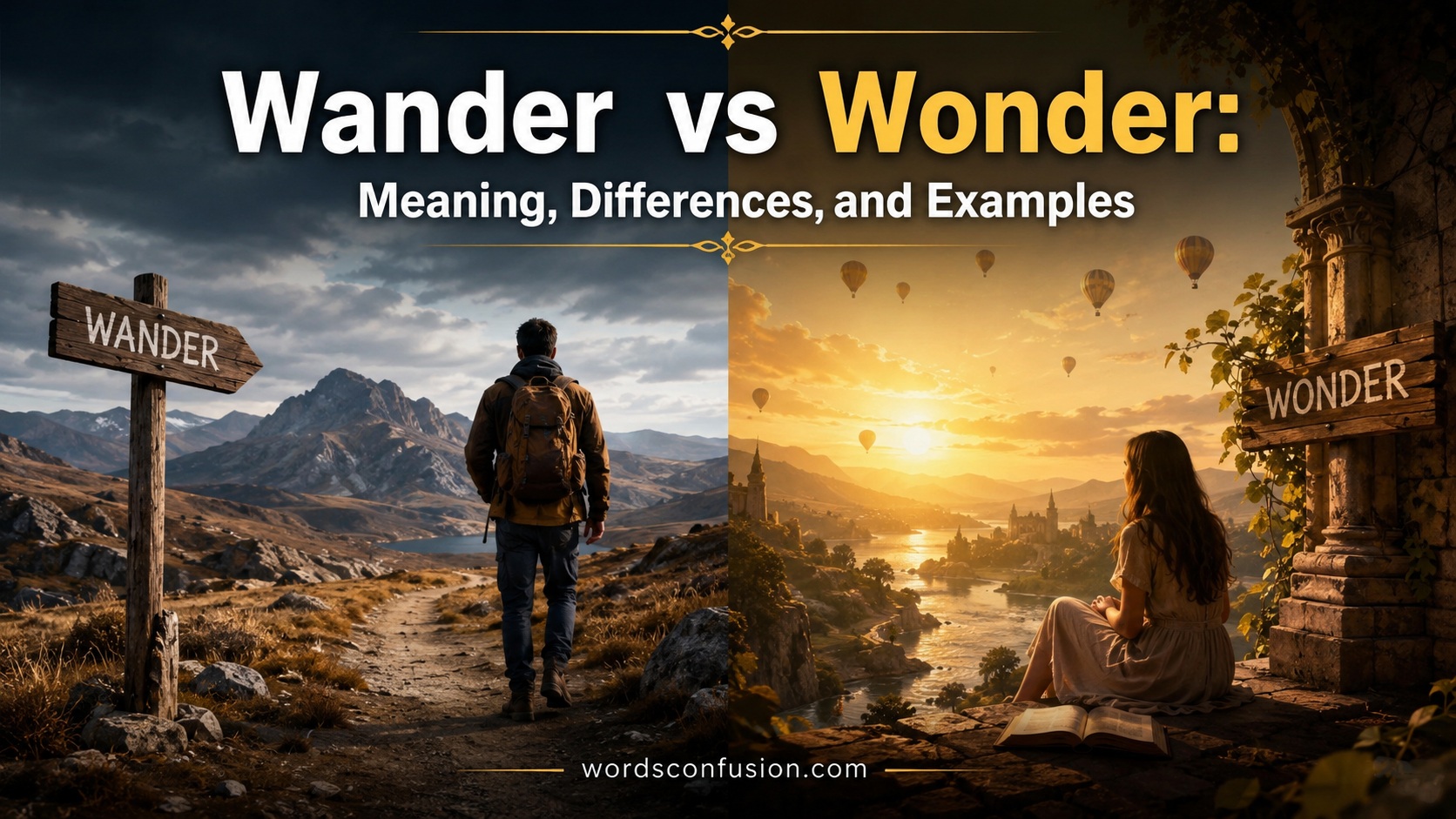
Choosing between wander and wonder can feel tricky because the two words differ by only one letter and sound very similar when spoken. However, their meanings are completely different. One describes moving from place to place without a fixed destination while the other describes thinking with curiosity or feeling amazement. Many English learners, students, and … Read more

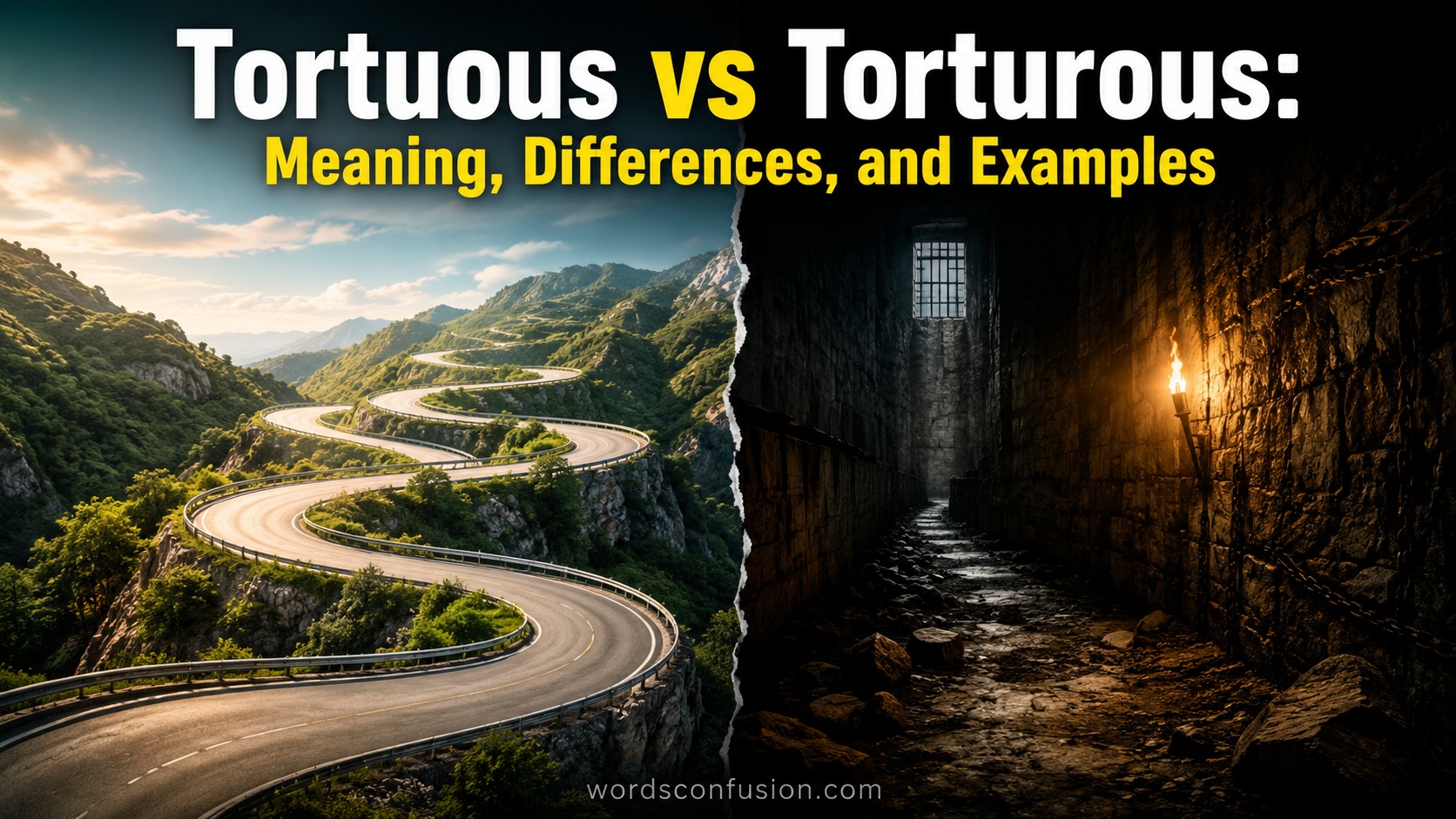
Tortuous vs Torturous: Meaning, Differences, and Examples

Tortuous vs Torturous

Learning English can feel like walking through a maze, especially when two words look almost identical but carry different meanings. Tortuous and torturous are perfect examples. They share similar spelling, have related origins, and even sound alike when spoken quickly. Because of this, many writers and speakers use them interchangeably even though they shouldn’t. Understanding … Read more

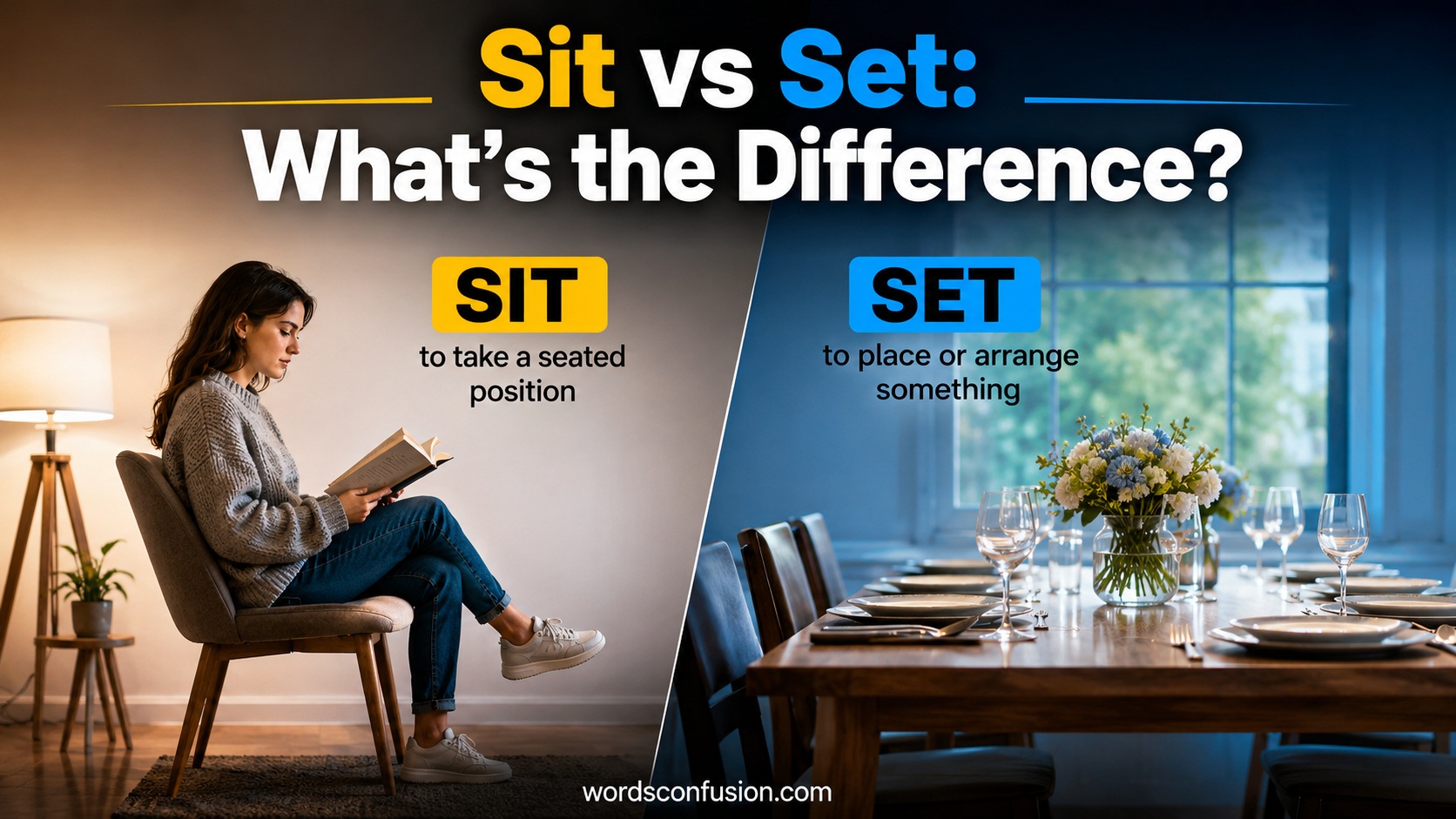
Sit vs Set: What’s the Difference? 

Sit vs Set

Choosing between sit and set can feel confusing because both words relate to position or placement. However, they follow different grammar rules and serve different purposes in a sentence. If you understand one simple rule, you’ll rarely confuse them again. The biggest difference is that sit usually describes someone or something resting in a seated … Read more

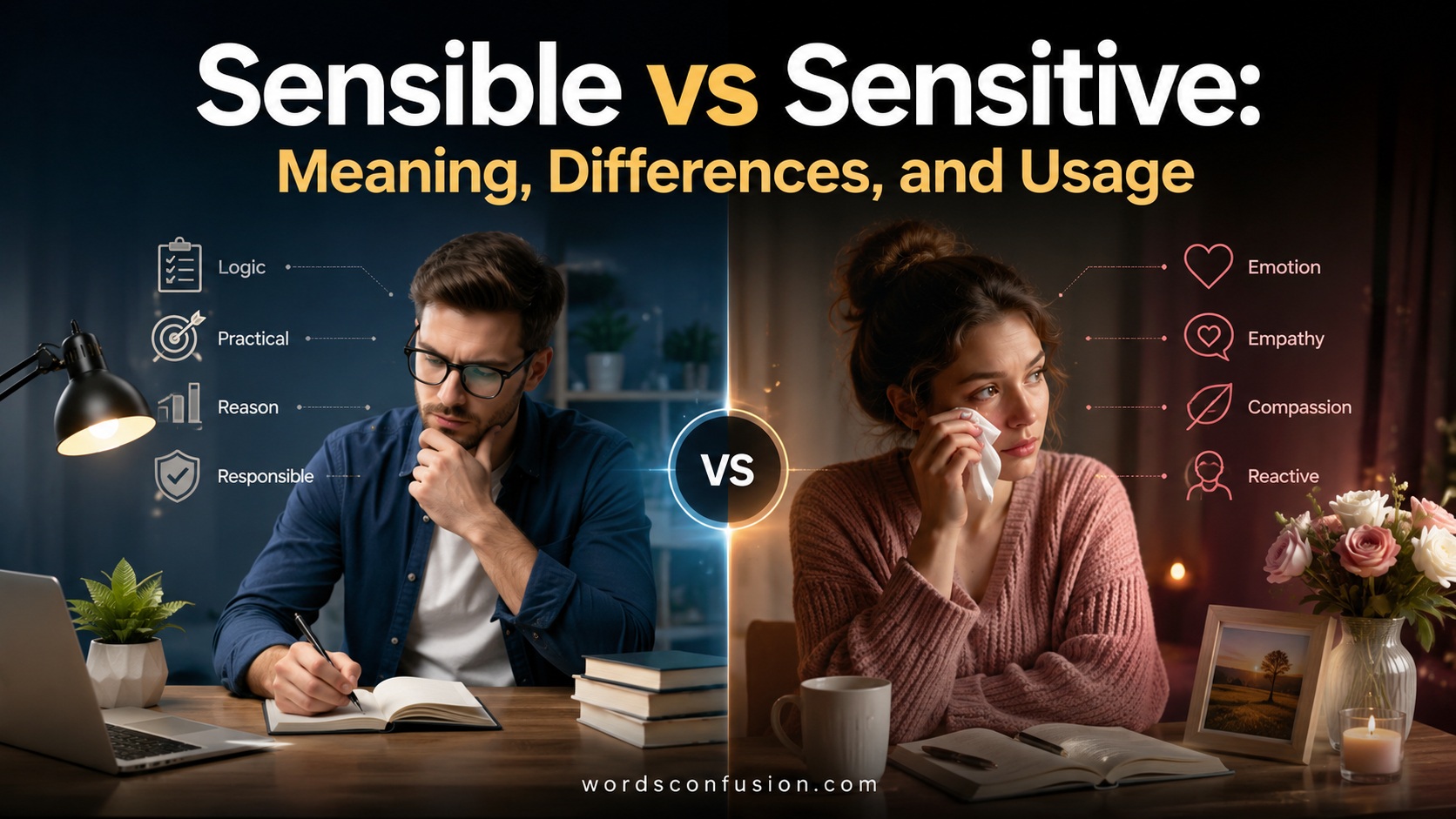
Sensible vs Sensitive: Meaning, Differences, and Usage

Sensible vs Sensitive

Choosing between sensible and sensitive can be surprisingly difficult. At first glance, the words look alike. They even share the same Latin roots. However, their meanings are completely different. Mixing them up can make your writing confusing or even change the meaning of a sentence. For example, imagine someone says, “She’s a sensible child.” That … Read more