Regard vs Regards: Meaning, Differences, and Grammar Rules
Regard vs Regards

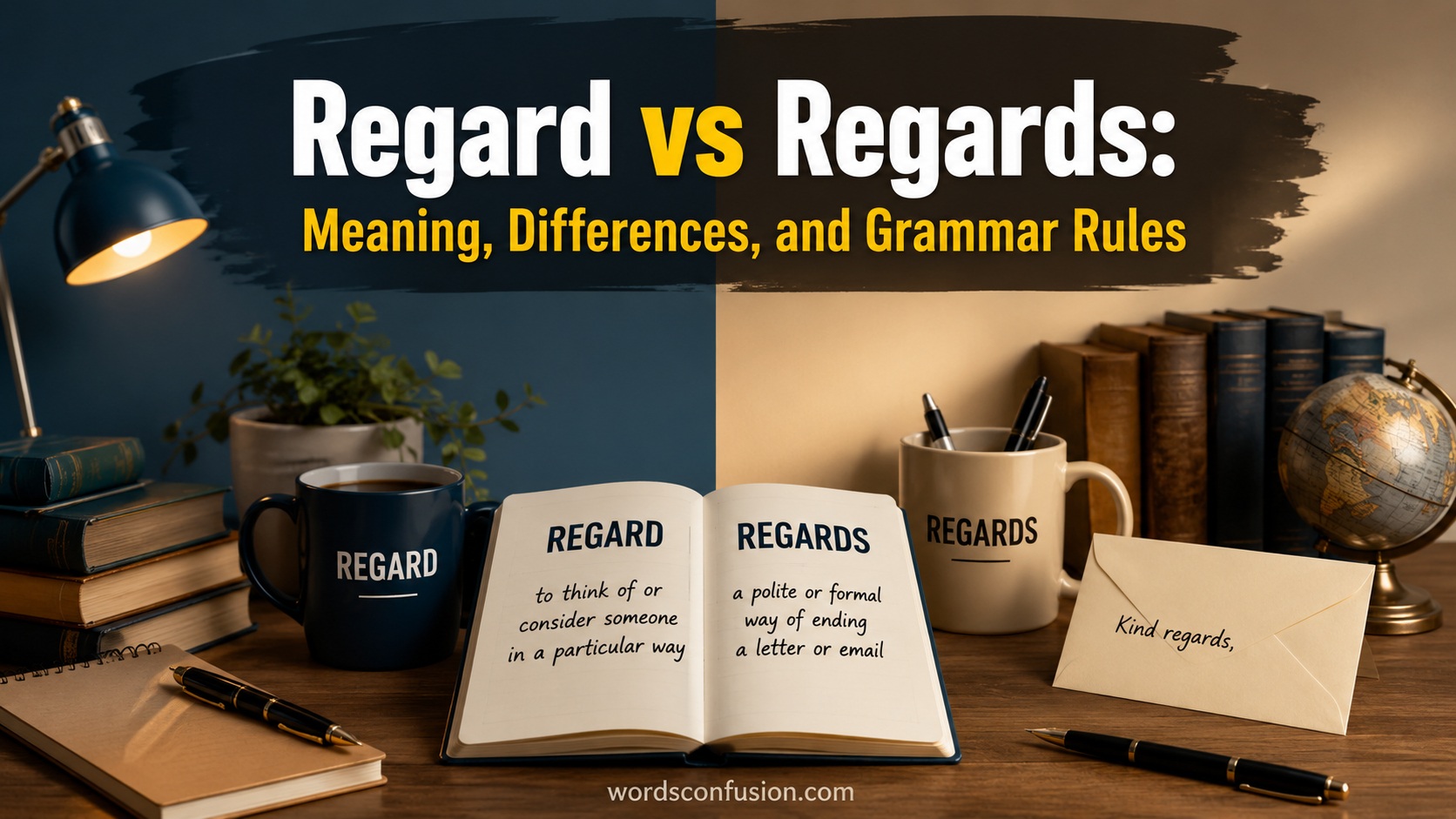
“Regard” and “regards” look almost identical, yet they serve different purposes in English. One is commonly used as a noun and verb while the other usually appears in email sign-offs or expressions of greetings. Because of their similar spelling, many English learners and even native speakers use them incorrectly. If you’ve ever wondered whether to … Read more
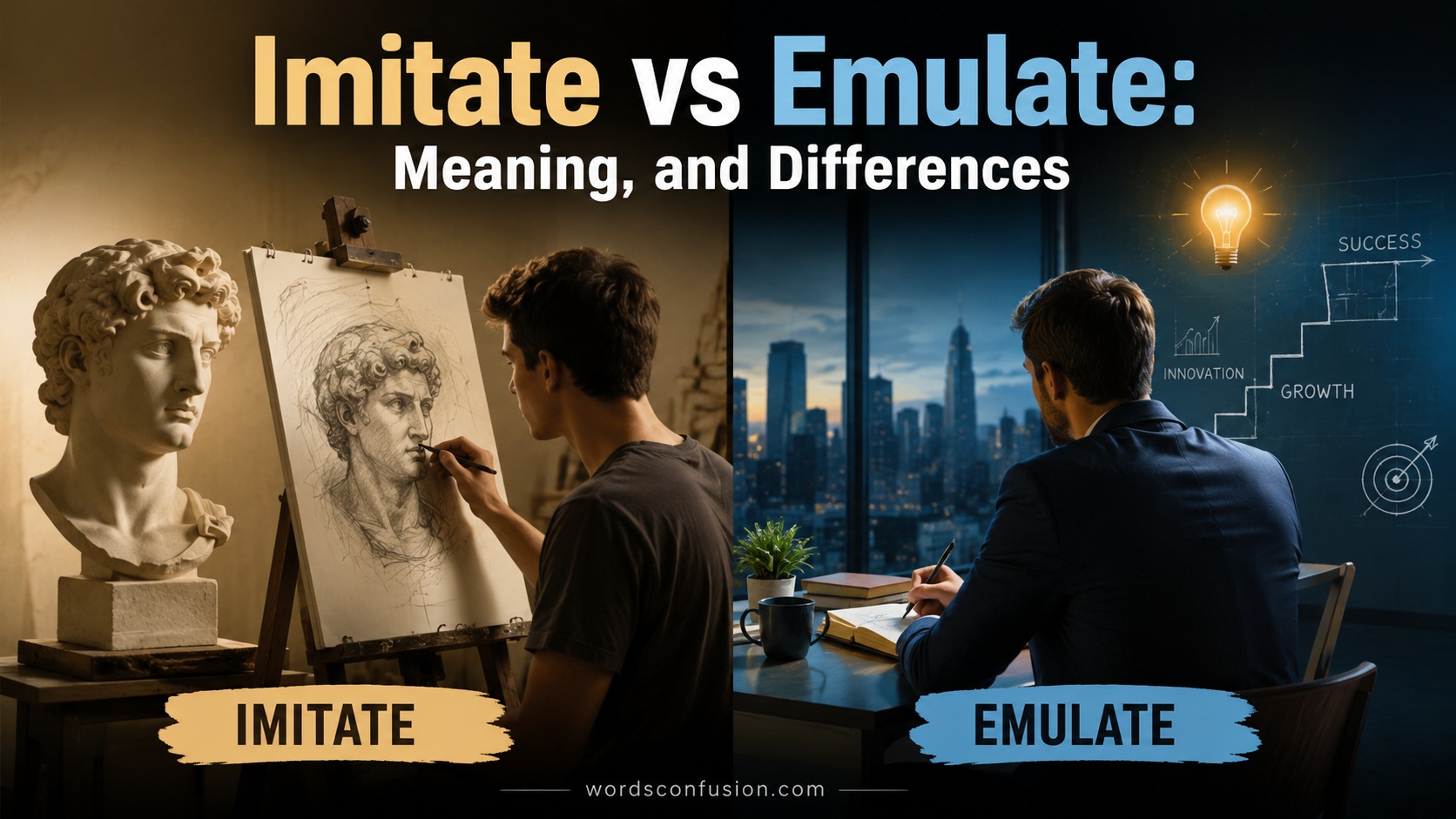
Imitate vs Emulate: Meaning, and Differences

Imitate vs Emulate

Imitate vs emulate can confuse even experienced English speakers because both words involve copying or following someone or something. However, they don’t mean exactly the same thing. If you imitate someone, you copy their actions, voice, appearance, behavior, or style. If you emulate someone, you usually admire their qualities or achievements and try to reach … Read more

Fewer vs. Less: Meaning, Difference, and Rules

Fewer vs. Less

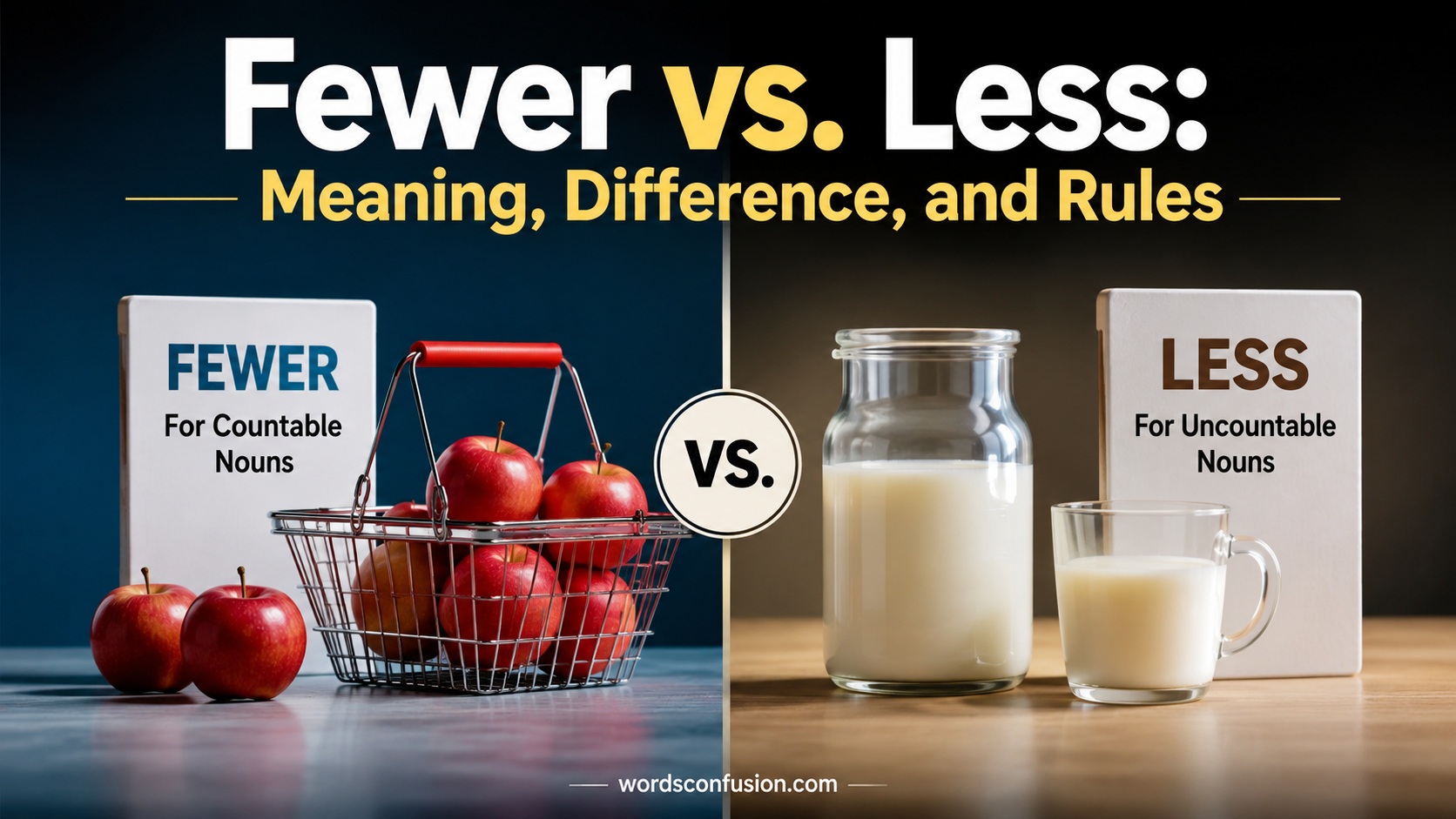
If you’ve ever paused before writing “less people” or “fewer people,” you’re not alone. The difference between fewer vs. less seems simple at first, yet certain expressions make the rule surprisingly tricky. The basic distinction is straightforward: fewer usually refers to a smaller number of countable things, while less usually refers to a smaller amount … Read more

Farther vs Further: How to Use Them Correctly

Farther vs Further

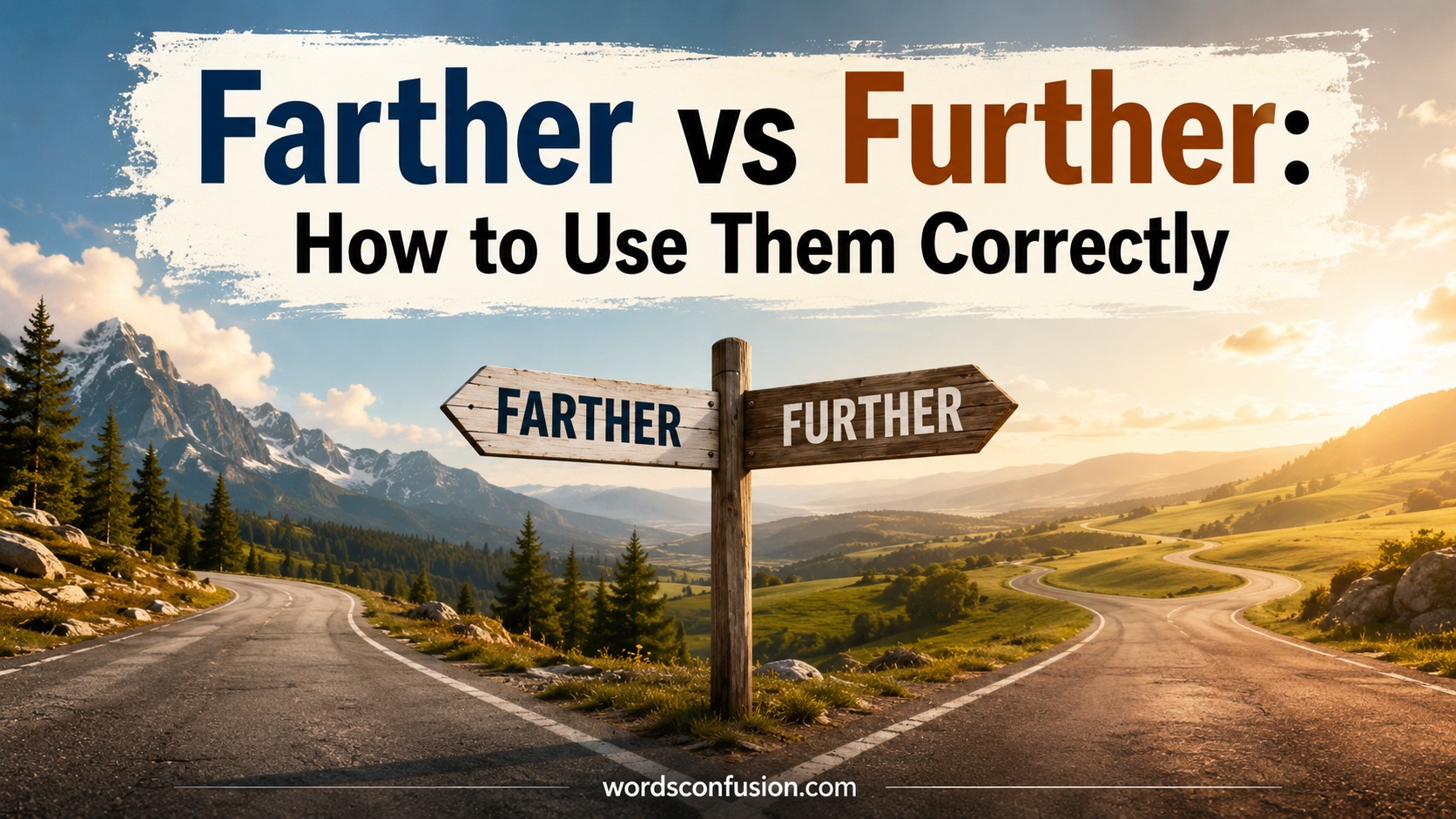
Farther vs further is one of those grammar questions that can make even confident writers pause. Both words come from far, both can relate to distance, and in everyday English, their meanings sometimes overlap. That’s where the confusion begins. The simplest traditional rule says farther refers to physical distance while further refers to figurative distance, … Read more