Receive vs Recieve: Which Spelling Is Correct? Meaning, and Examples

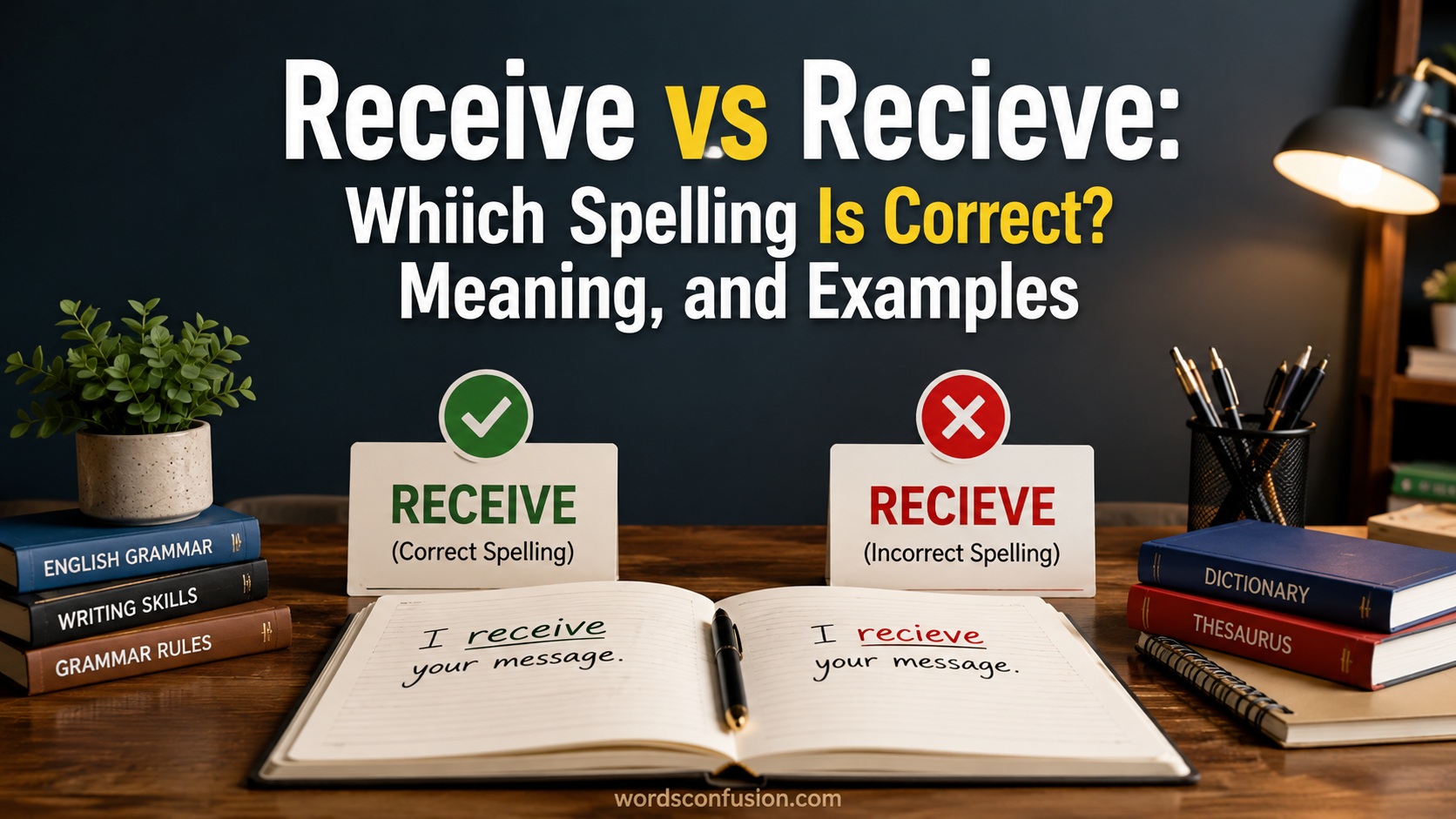
Receive vs Recieve

If you’ve ever paused while typing receive and wondered whether it should be spelled receive or recieve, you’re not alone. This is one of the most common spelling mistakes in English. Even fluent speakers occasionally reverse the letters “e” and “i” because the pronunciation doesn’t make the correct spelling obvious. The good news is that … Read more

Separate vs Seperate: What’s the Difference? Meaning, and Examples
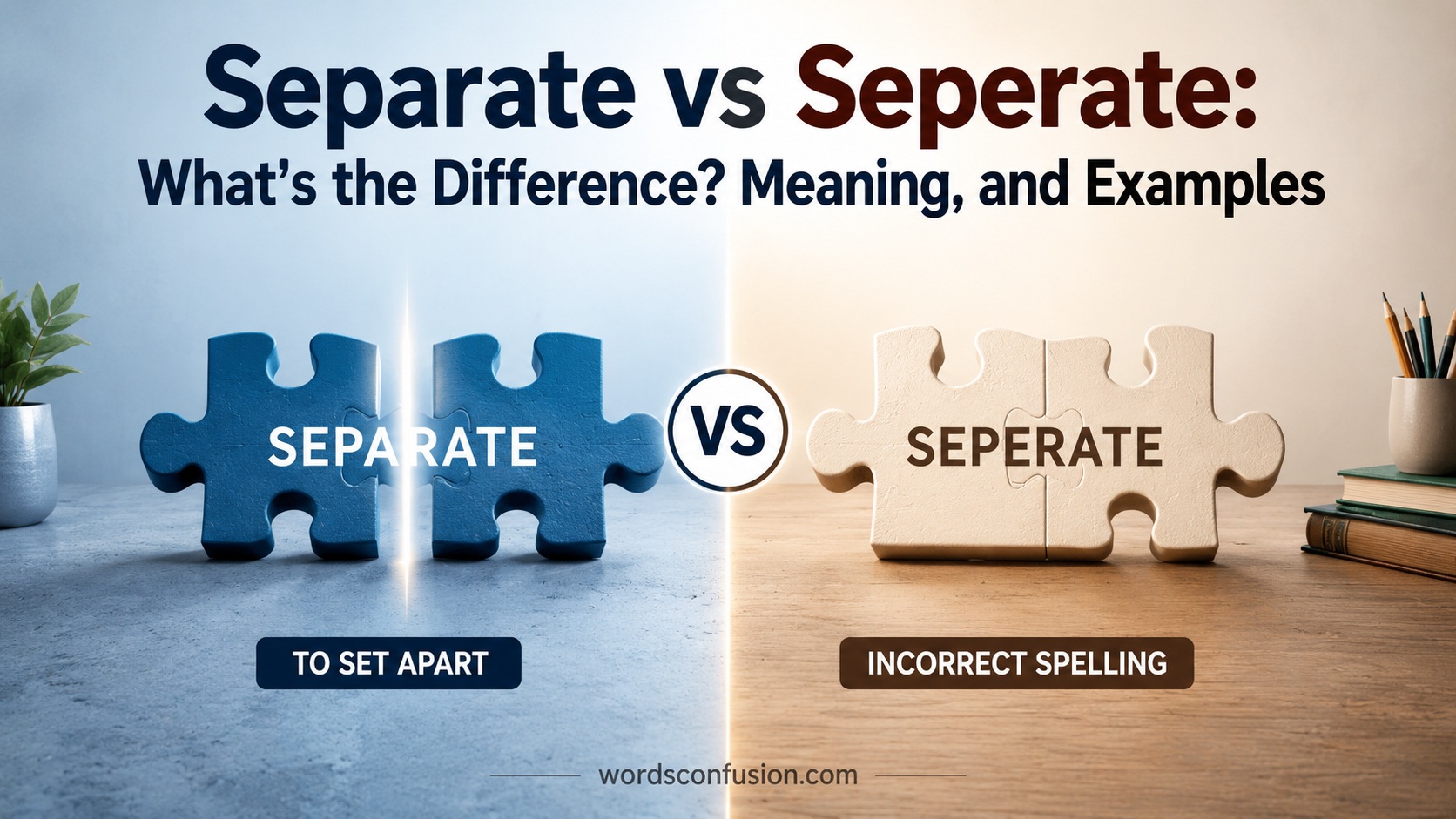
Separate vs Seperate

Have you ever paused while writing and wondered whether “separate” or “seperate” is the correct spelling? You’re not alone. Thousands of people search for Separate vs Seperate every month because it’s one of the most commonly misspelled words in English. The confusion usually comes from pronunciation. Many people pronounce the word in a way that … Read more

Spelled vs Spelt: What’s the Difference? Meaning, and Examples

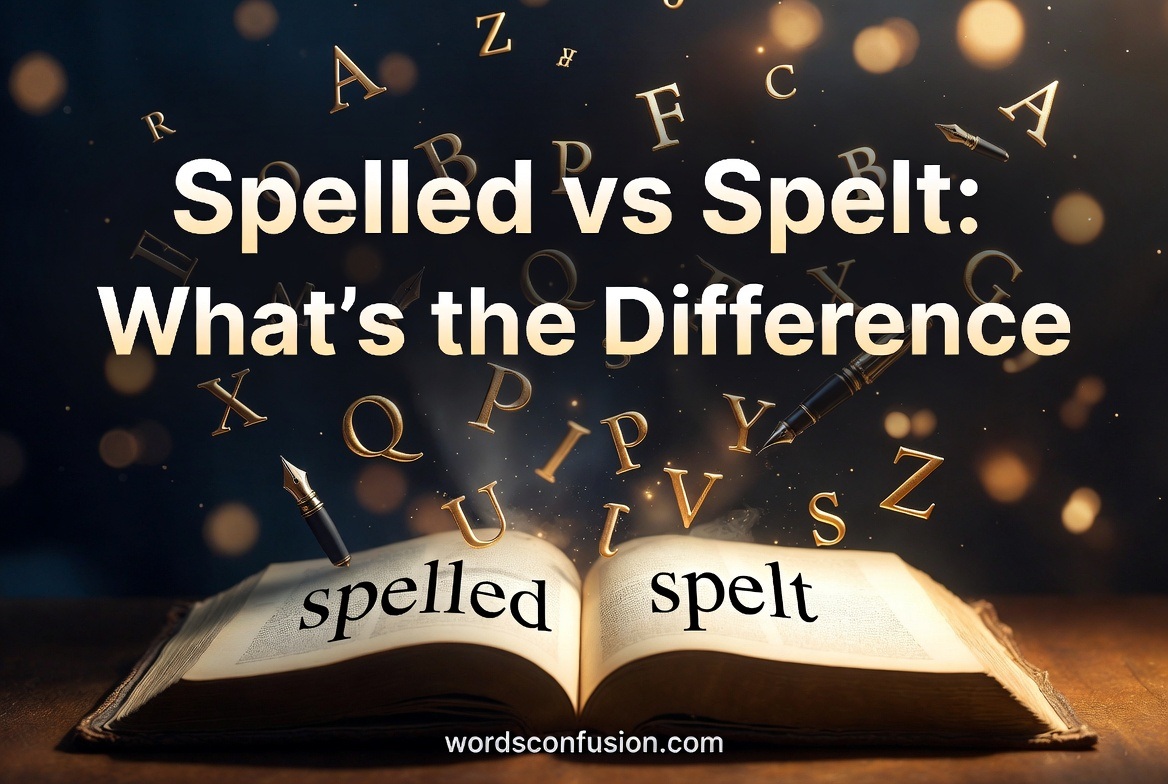
Spelled vs Spelt

Have you ever paused while writing and wondered whether you should use spelled or spelt? You’re not alone. These two words often confuse English learners, students, writers, and even native speakers because both appear in books, newspapers, and dictionaries. The good news is that both “spelled” and “spelt” are grammatically correct. They have the same … Read more

Data vs Information: What’s the Difference? Meaning, and Examples

Data vs Information

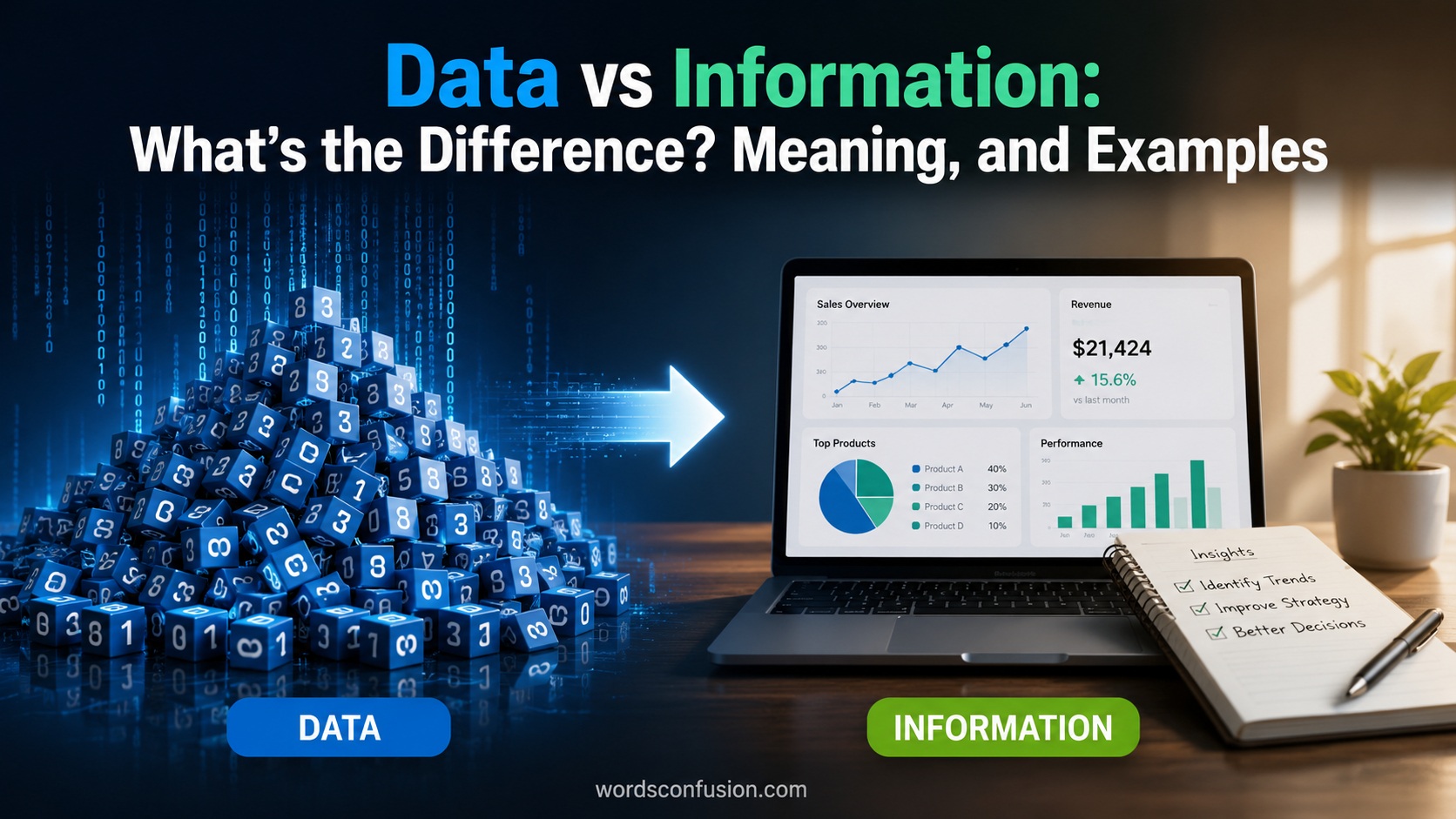
Data vs information are two terms people often use as if they mean the same thing. You hear them in business meetings, classrooms, technology discussions, and everyday conversations. Yet they represent different stages of the same process. Understanding that difference can help you make smarter decisions, interpret reports correctly, and communicate more effectively. Think about … Read more

Accuracy vs Precision: What’s the Difference? Meaning, Examples, and Correct Usage

Accuracy vs Precision

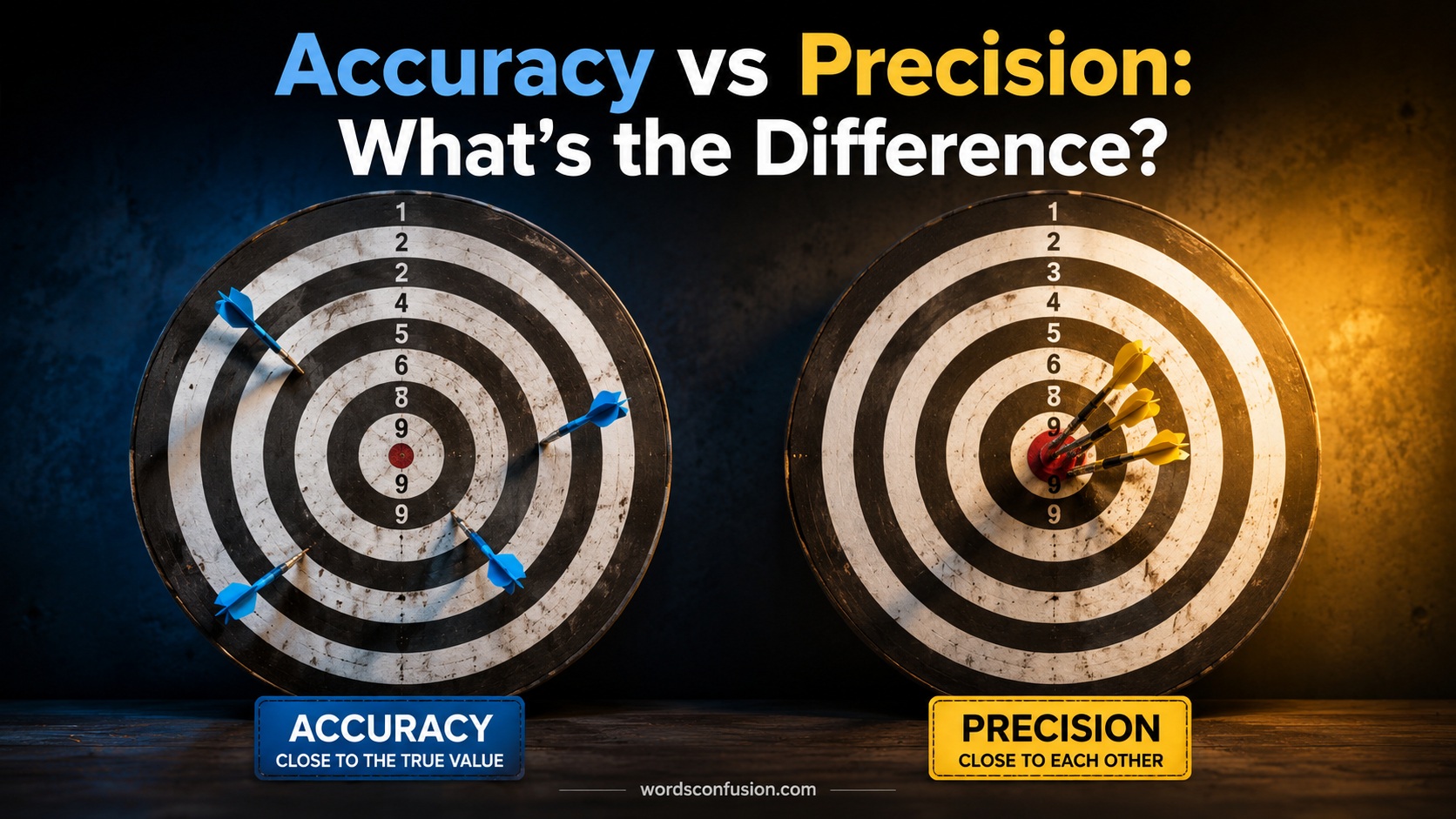
When people compare accuracy vs precision, they often assume both words mean the same thing. They don’t. Although the terms frequently appear together, they describe two different qualities of a measurement. Understanding that distinction helps you interpret data correctly, make better decisions, and communicate more clearly in science, engineering, healthcare, business, and even everyday life. … Read more